Guides
How to Search Canadian Court Dockets: Federal, Provincial, and Fees
Learn how to search Canadian court dockets online: federal and provincial registries, CAD fees from $20 to $150, what stays private, and free access tips.
What to take away
- Searching a Canadian court docket rarely means one national portal. You search a specific registry or a provincial electronic system, and many older files still sit in paper form.
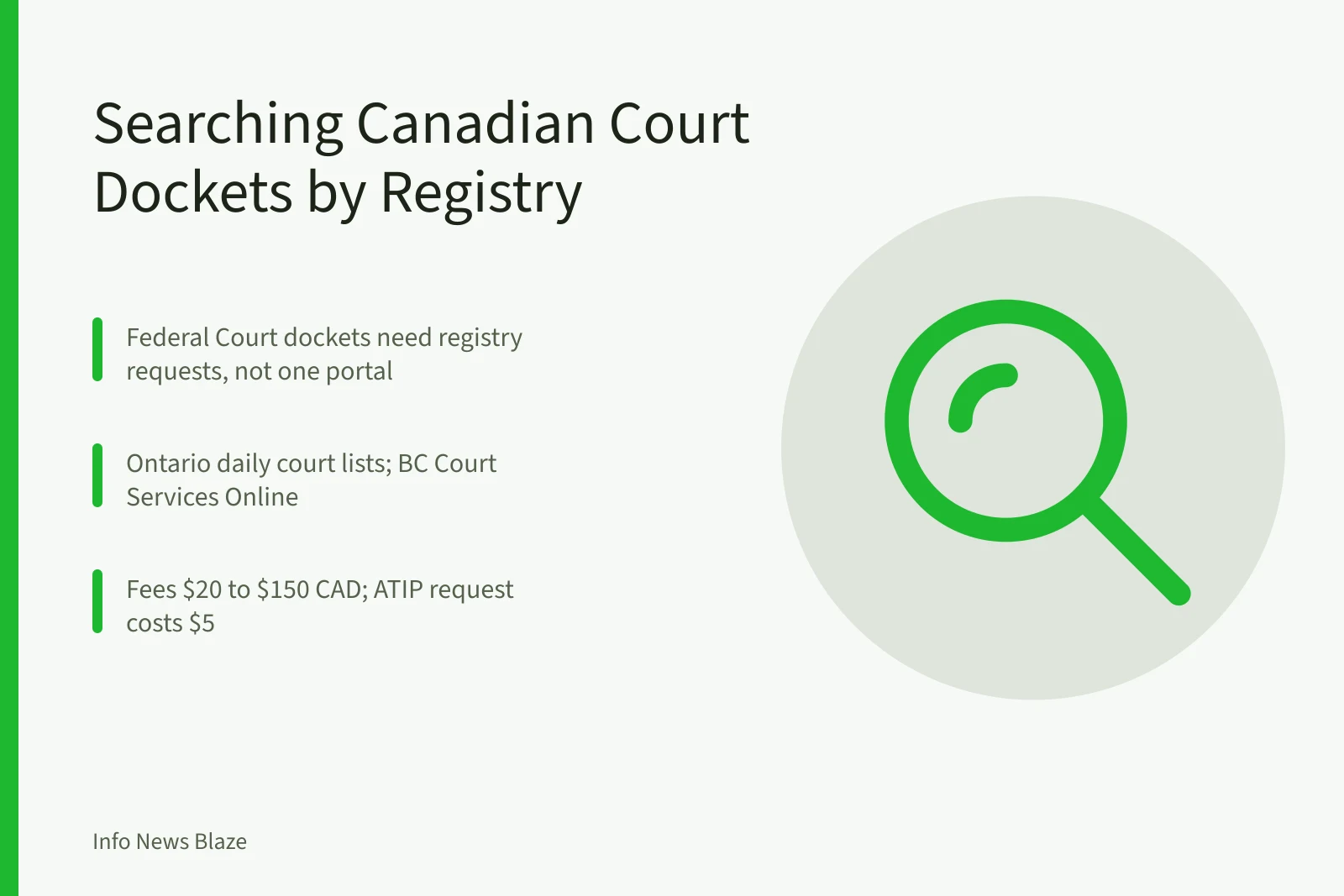
- Federal court dockets are accessible through Federal Court registry offices, not a PACER-style online database. You often pay search and copy fees per file.
- Provincial docket lookup varies by province. Ontario publishes daily court lists, British Columbia runs Court Services Online, and several other provinces require registry requests.
- Budget for a basic docket search between $20 and $150 CAD, before certification or commercial background-check fees.
- Online index access costs little, but certified copies and registry time drive the price.
Federal court dockets and the public ledger
The Federal Court of Canada and the Federal Court of Appeal keep separate registries. A docket search starts with the court registry where the case was filed, not a central online search. The Department of Justice explains where court records can be located, including registry offices and online sources. Some federal court decisions appear on CanLII, but the full docket sheet, which lists filings and orders, often requires a registry request.
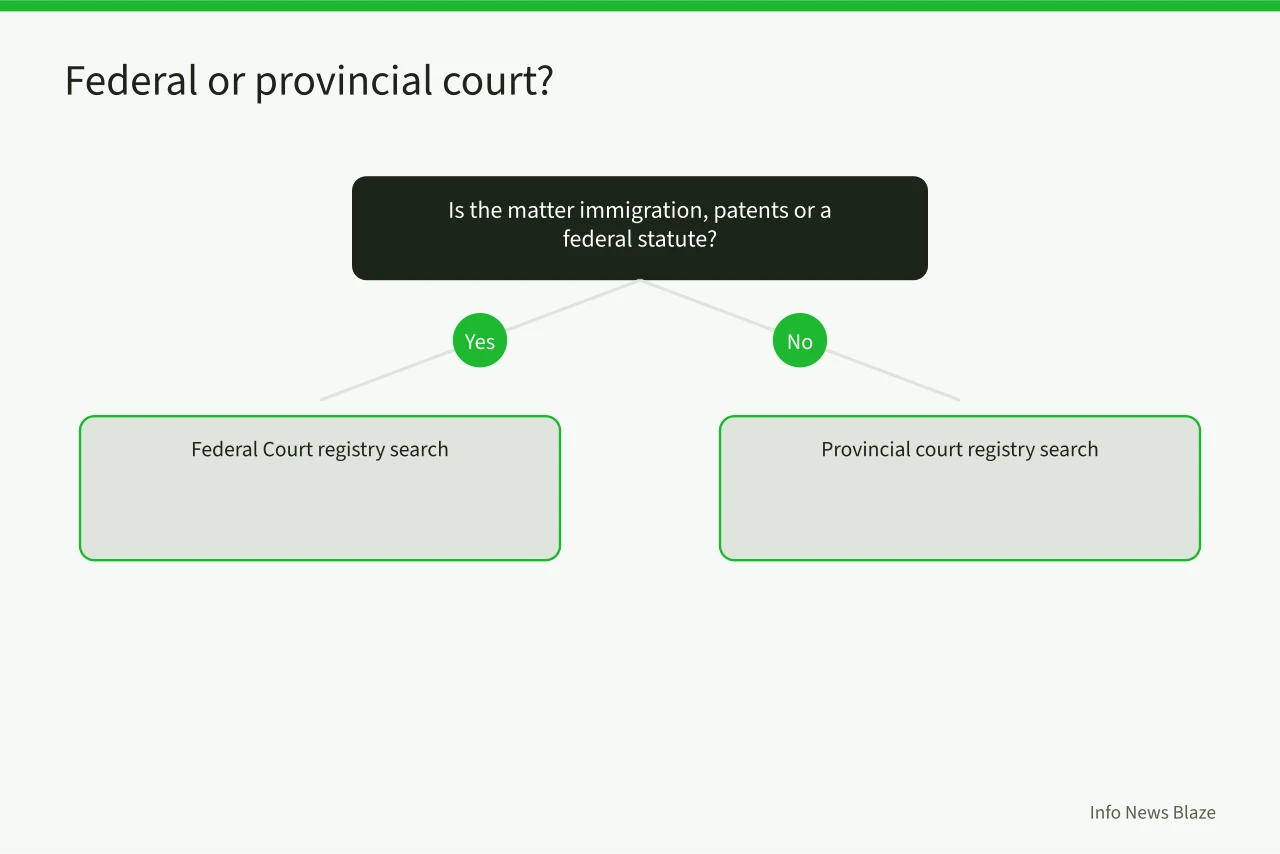
Federal and provincial courts are not interchangeable. A federal matter under a statute such as immigration or patents sits in the Federal Court, while family or small claims matters sit in provincial court. The jurisdiction split follows the same line as Federal vs Provincial Bill procedures. Knowing that split saves time before you pay a search fee.
Provincial docket lookup by province
Provincial courts run their own systems. Ontario Superior Court of Justice publishes daily court lists and provides guidance on requesting court documents. British Columbia has Court Services Online for civil searches, while Alberta and Saskatchewan route many looks through provincial court registry or eCourt services. Quebec's plumitif is public for many court rolls.
What is online is usually the court list or index, not the full file contents. Access to provincial court records uses rules similar to federal access requests, although How FOIA requests work shows a U.S. baseline with more statutory detail.
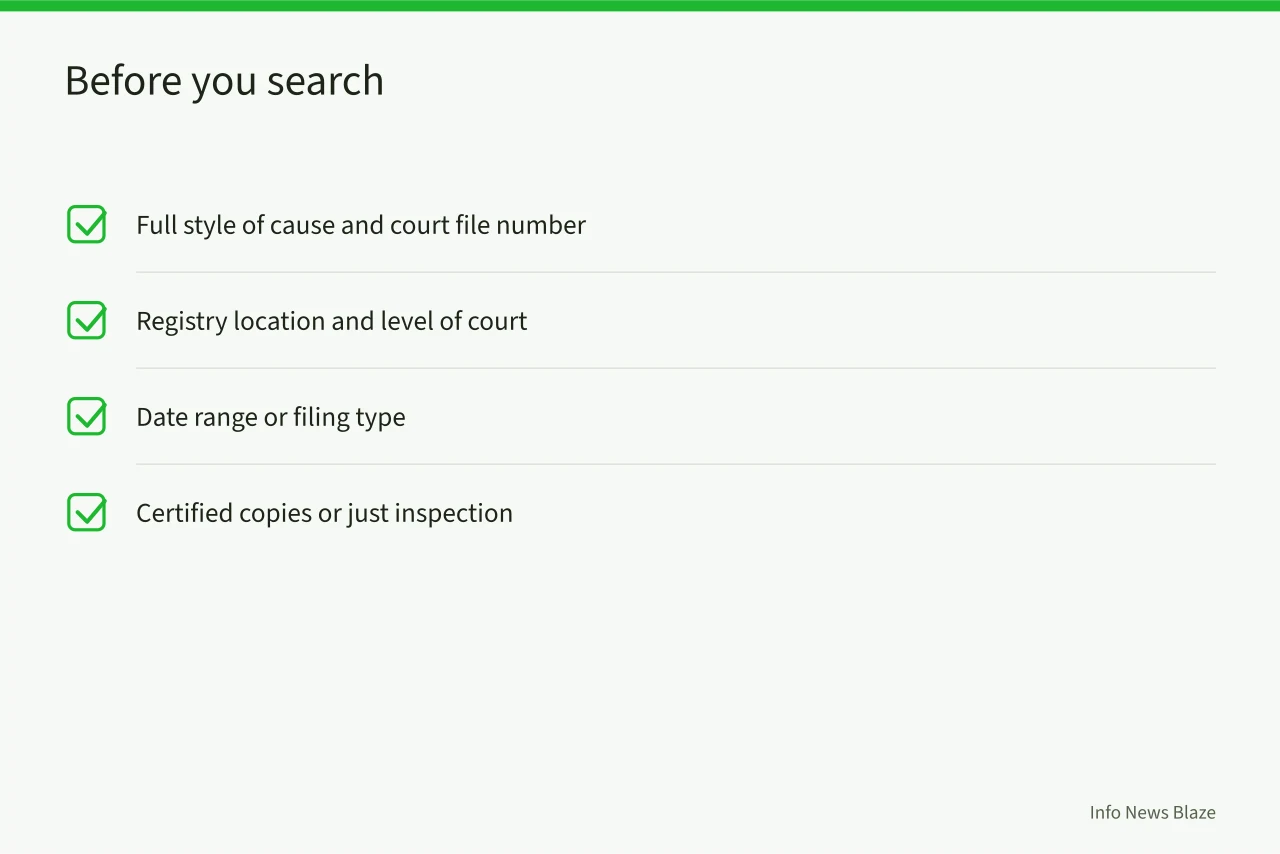
Before you search, collect:
- Full style of cause and court file number
- Registry location and level of court
- Date range or filing type
- Whether you need certified copies or just inspection
What the range covers
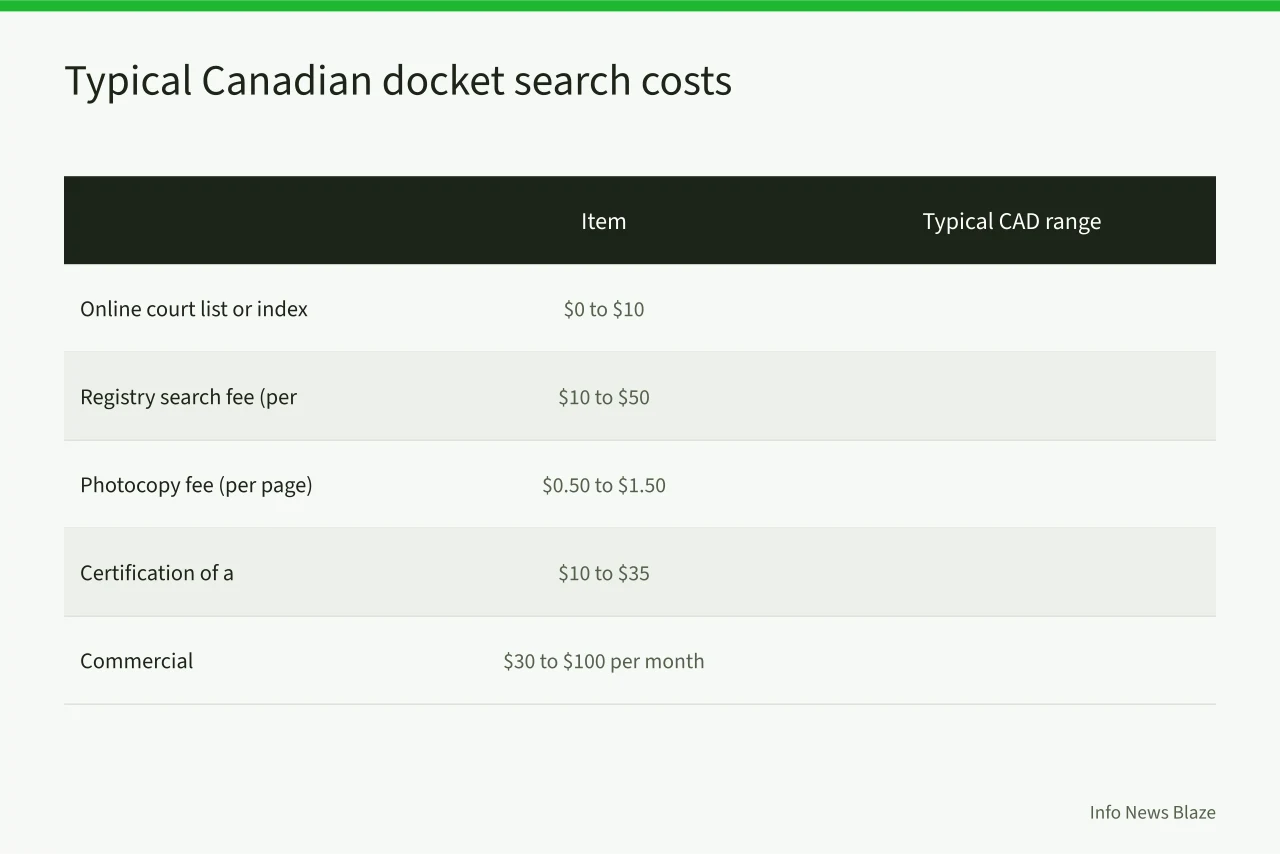
A basic search budget covers lookup time, per-page copies, and certification if needed. We use illustrative ranges because registry fee schedules differ by province and by year. A typical search runs from $20 CAD for a simple online index lookup to $150 CAD for a paper file with certified extracts.
| Item | One-off or recurring | Typical CAD range | Notes |
|---|---|---|---|
| Online court list or index view | One-off | $0 to $10 | Free on most court websites |
| Registry search fee (per file) | One-off | $10 to $50 | Varies by province |
| Photocopy fee (per page) | One-off | $0.50 to $1.50 | Certified copies cost more |
| Certification of a document | One-off | $10 to $35 | Per document or per file |
| Commercial background-check subscription | Recurring | $30 to $100 per month | Adds bulk search and monitoring |
Line by line
Registry search fees pay for a clerk to locate a file. Photocopy fees cover paper or electronic reproduction. Certification adds a court seal and signature. A commercial subscription replaces multiple registry trips, but it is optional. A federal access to information request costs $5 to file, as listed on Canada.ca, but that route is for administrative records, not for most court files.
Fixed against variable
Fixed one-off costs are the search fee and certification. Variable costs are per-page copies and any courier or rush service. Recurring costs appear when you monitor a file over months or run many searches. Decide whether you need a single docket or ongoing tracking before you pay.
What the tools do not include
Court websites and search tools do not include full evidence, sealed documents, youth records, or documents covered by publication bans. Privacy rules shape what is public in a docket. For a comparison of U.S. and Canadian privacy approaches, see cross-border newsrooms. A docket search is not a background check. Criminal record checks are separate through police or RCMP.
A docket search is not the same as a criminal record check. Do not pay a private service for what a registry will provide directly.
Example: A first Ontario search
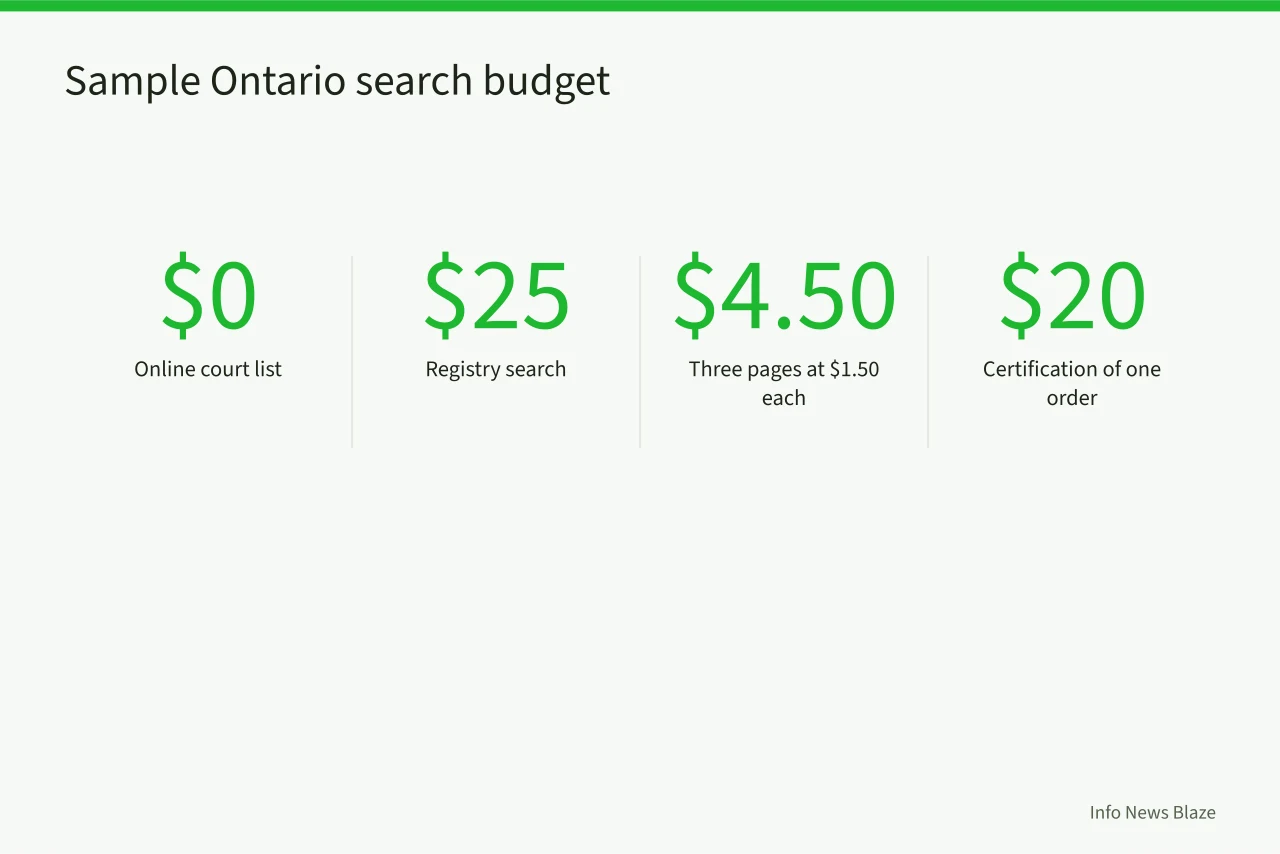
A reporter wants one Superior Court civil file in Toronto. The daily court list shows the file number and next hearing date. The reporter asks the registry to inspect the file, then orders copies of three key documents. A sample budget: $0 for the online list, $25 for registry search, $4.50 for three pages at $1.50 each, and $20 certification of one order. Total: $49.50 CAD, before parking or courier.
Where budgets leak
Copying an entire file without narrowing the request can add $10 or more per page batch. Rush fees and courier charges often appear only at the registry counter. Asking for certified copies when a plain copy would do also raises the total. One other leak: paying a commercial service for public information you could pull from a free court list. For the U.S. counterpart, PACER Docket Search shows how page fees can accumulate, and Canadian readers can learn from that pattern.
Common questions
Is there one website to search all Canadian court dockets? No. You search a specific court registry, a provincial electronic system, or a court website's daily list. There is no national public docket portal.
What does a basic court docket search cost? A simple online list view is often free. A registry search with copies and certification typically runs from $20 to $150 CAD, depending on the file and province.
Do I need a lawyer to search a court docket? No. Members of the public can request to inspect most court files, although some documents may be sealed or restricted by a publication ban.
Are criminal record checks the same as docket searches? No. A docket search shows documents filed in a specific court file. A criminal record check is a separate inquiry through police or RCMP.