Guides
PACER Docket Search: Fees, Exemptions, and How to Avoid Overpaying
PACER docket search fees run about $0.10 per page, but the $30 quarterly cap and free courthouse terminals change what you actually owe for records.
What to take away
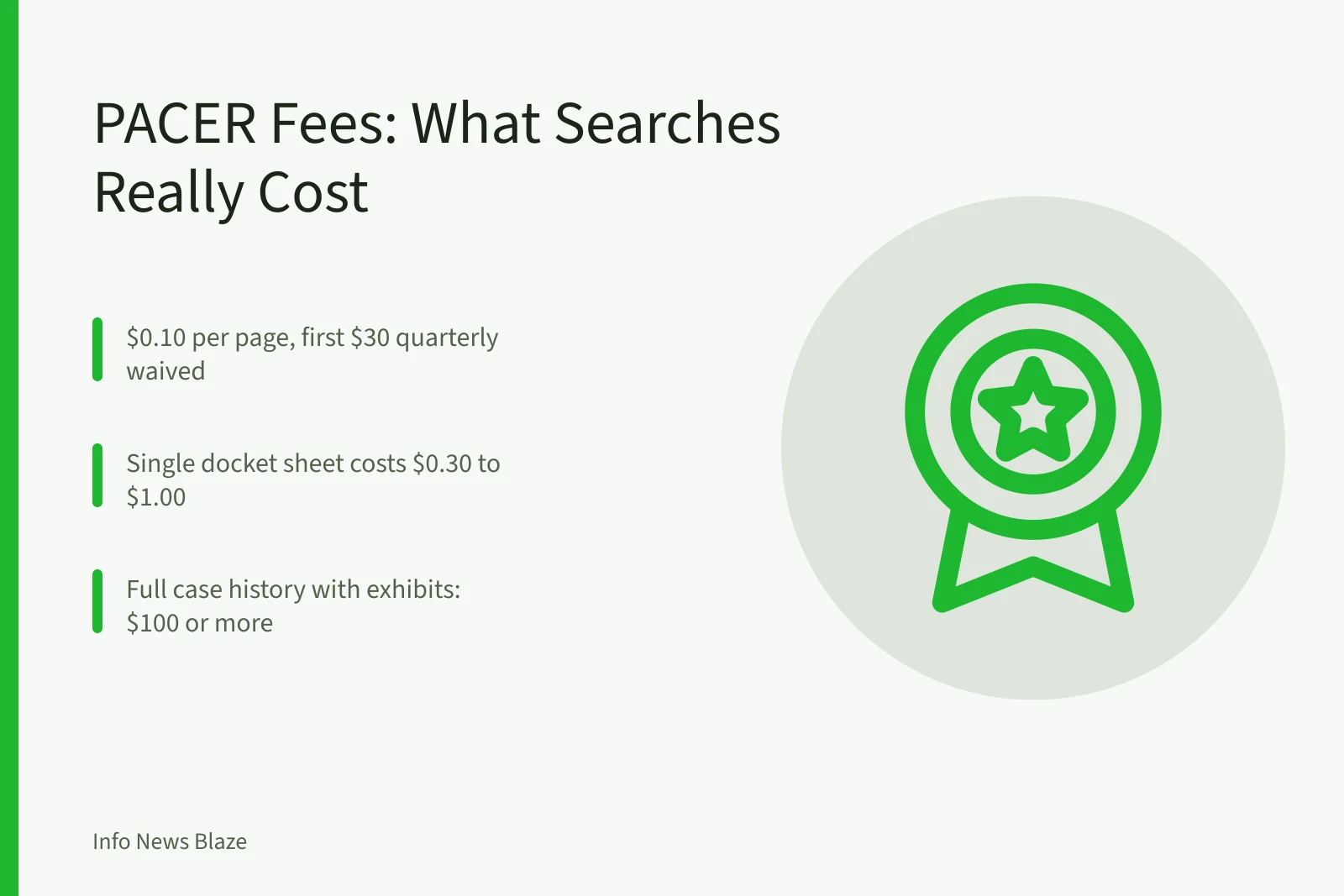
- PACER charges $0.10 per page for most searches and downloads, and the first $30 of usable billing in a quarter is waived under the current fee schedule.
- A typical single-case lookup costs $0.10 to $3.00, a multi-case research session runs $3 to $30, and full litigation histories can reach $100 or more when you pull every document.
- Court-provided public terminals stay free, and some courts waive fees for parties, academics, and small nonprofit researchers.
- The money leaks through re-downloads, broad searches, and print jobs nobody needed, not through the headline page rate.
What the range covers
The fee schedule is set by the Judicial Conference and posted by the federal courts. PACER bills per page, with a $0.10 charge on most pages returned or downloaded. A docket sheet is short. A complaint, a motion, and an exhibit set are not.
That difference drives the spread. A reader checking one filing pays a dime. A reporter reconstructing five years of litigation pays real money. The official PACER FAQ states the page rate, the $30 quarterly threshold, and the exemption categories in one place.
Line by line
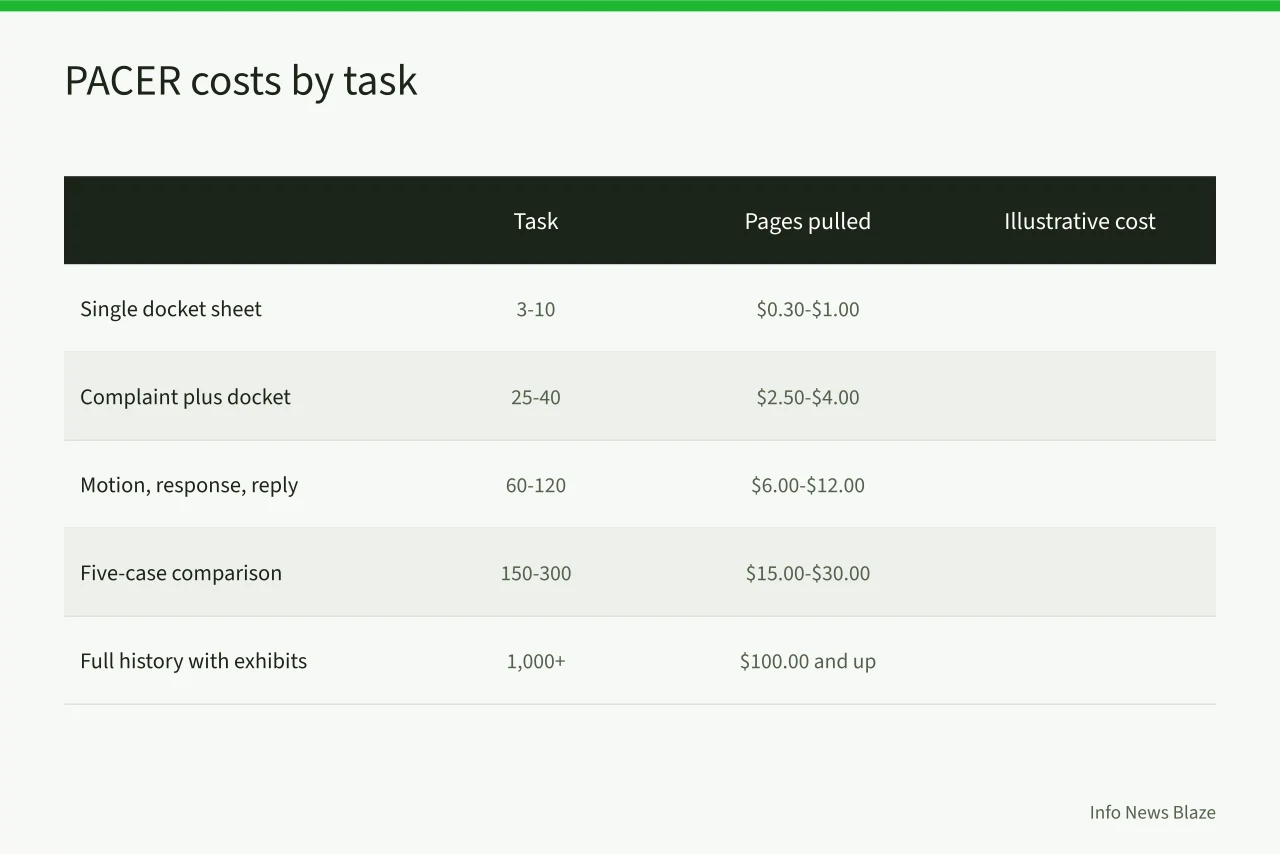
The table below shows illustrative costs for common tasks. Figures assume the current $0.10 page rate and a 30-page average for a substantive filing.
| Task | Pages pulled | Illustrative cost |
|---|---|---|
| Single docket sheet | 3 to 10 | $0.30 to $1.00 |
| One complaint plus docket | 25 to 40 | $2.50 to $4.00 |
| Motion, response, and reply | 60 to 120 | $6.00 to $12.00 |
| Five-case docket comparison | 150 to 300 | $15.00 to $30.00 |
| Full case history with exhibits | 1,000 or more | $100.00 and up |
A quarter that crosses $30 in billable pages triggers an invoice for the amount above the threshold. Stay under it and you owe nothing. The threshold resets every quarter, so a heavy January does not carry into April.
Fixed against variable
One-off costs are the searches you run once: a docket sheet, a complaint, a judgment. They are small, predictable, and easy to budget at $1 to $5 per matter.
Recurring costs are the ones that surprise people. A monitoring habit, where you check the same docket weekly, re-pulls the same documents, and prints them, compounds across a quarter. That pattern is where a $10 intent becomes a $90 invoice.
Court terminals are the fixed-cost alternative. Public access terminals at federal courthouses return documents at no charge, which is why the fee schedule treats them as the free path. The trade is travel time and limited hours.
What the tools do not include
PACER returns what was filed. It does not summarize, rank, or explain. A docket sheet tells you a motion exists; it does not tell you whether the motion matters.
State court systems sit outside PACER entirely, and many of them run their own fee schedules or free portals. If your story crosses into state court, the PACER budget does not cover it.
Sealed documents, grand jury materials, and certain juvenile records are not available at any price through the system. Readers who expect a complete record from a paid search will be disappointed. For how agencies handle withheld records in a different context, the FOIA request process explains appeal rights and the nine exemptions.
Where budgets leak
Three habits drain a PACER account faster than heavy research.
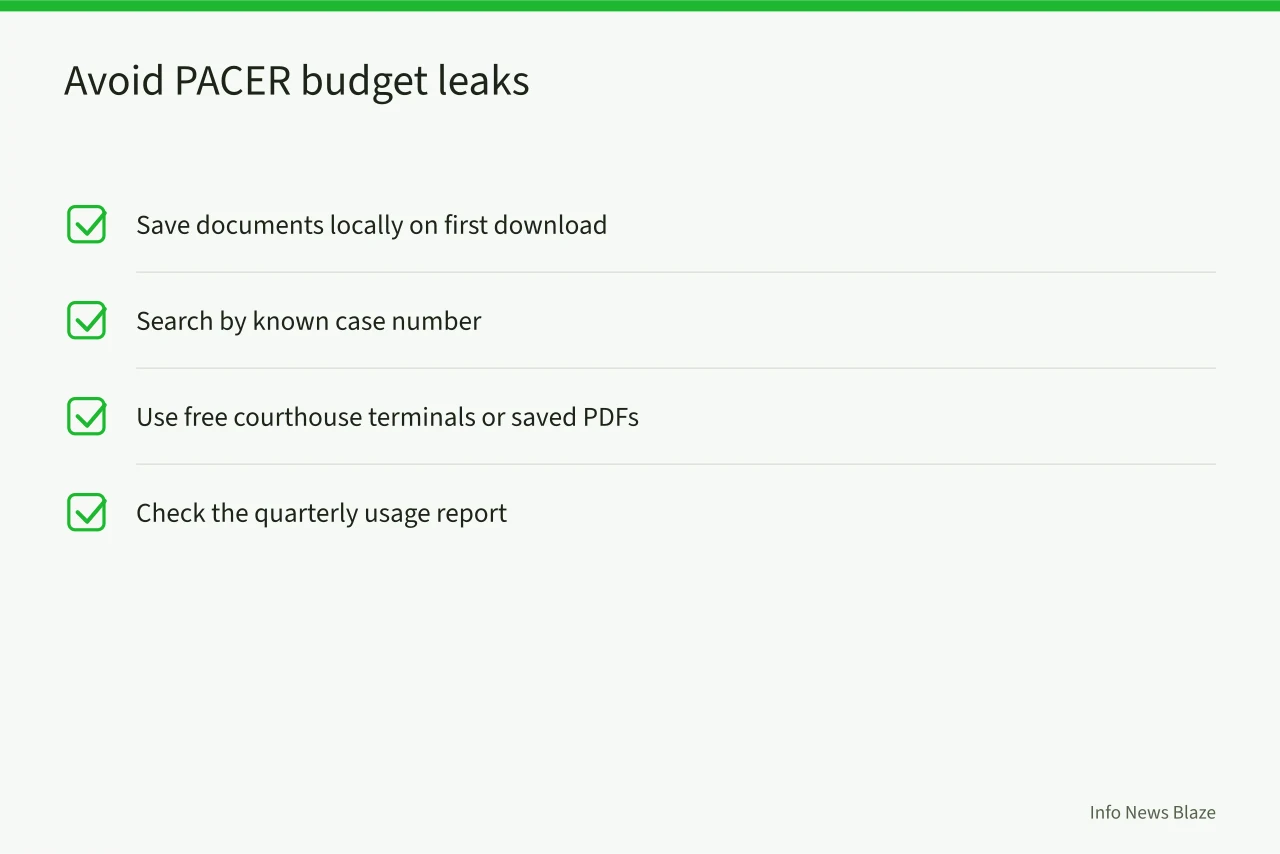
- Re-downloading the same document because it was not saved locally the first time.
- Running broad party-name searches instead of pulling a known case number.
- Printing from PACER when a free courthouse terminal or a saved PDF would do.
A fourth leak is silence. Nobody checks the quarterly usage report until the invoice arrives. Track the running total the way you would track any metered expense.
The same discipline applies to other public records work. Our guide to how FOIA requests work at the federal level covers the withholding side, which pairs well with a PACER budget.
A docket search is a metered utility. Treat it like one and the invoice stops being a surprise.
Example
A small newsroom covering a bankruptcy spends $0.10 on a docket sheet in week one. A reporter pulls the petition and two motions, about 90 pages, for $9.00. Over the next eight weeks the desk checks the docket six times and re-pulls two documents, adding $4.00. The quarter total lands near $13.10, under the $30 threshold, so the invoice is zero.
A second desk runs party-name searches across 12 related cases, pulls full histories, and prints everything. That quarter reaches $140. The bill is $110, the amount above the threshold.
Common questions
Is PACER free for anyone? Fees are waived for certain parties, academic researchers, and some nonprofit and small-entity users under categories the courts publish. Courthouse public terminals are free for everyone.
Does the $30 threshold apply every quarter? Yes. Billing runs on a quarterly cycle, and the first $30 of usable billing in each quarter is waived. Unused credit does not roll over.
Can I avoid fees without a courthouse visit? Sometimes. Some courts and libraries offer free access programs, and RECAP-style archives hold documents other users already purchased. Coverage is uneven, so verify before relying on it.
What happens if I do not pay? Access can be suspended until the balance clears. The courts treat unpaid PACER bills as a collections matter, so budget the quarterly total rather than discovering it later. Readers tracking federal records elsewhere may find our guide to SEC filings explained for readers useful for the disclosure side.