Guides
How a City Emergency Declaration Works: Powers, Duration, and Oversight
A city emergency declaration unlocks powers like curfews and emergency spending. Learn duration rules, extension limits, city council votes, and oversight.
What to take away
- A city emergency declaration is a local legal order that activates specific powers like curfews, evacuations, and emergency spending. It cannot suspend constitutional rights.
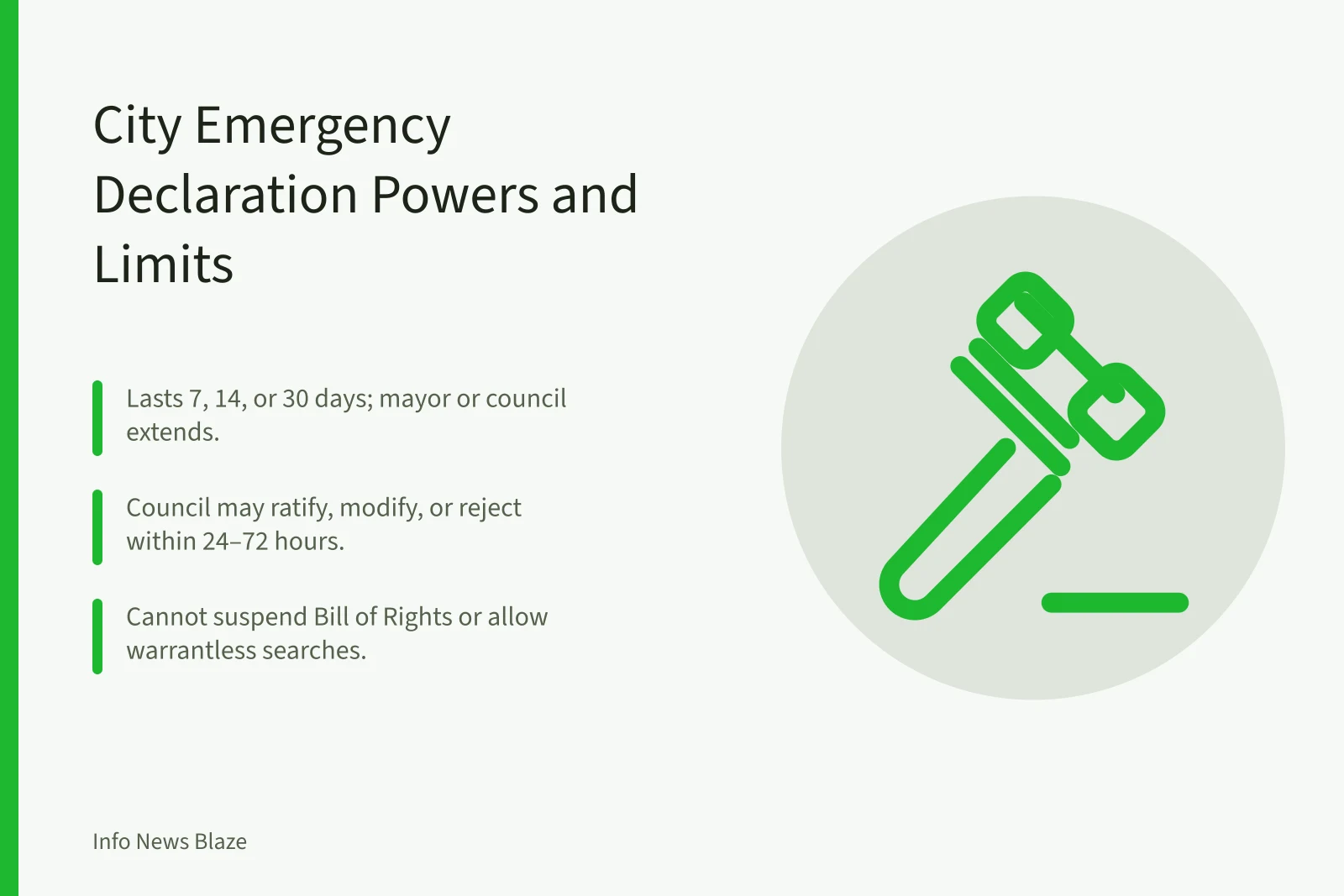
- Duration varies by state and the order itself. Common periods are 7 to 30 days, with extensions by the mayor or city council.
- The city council often must ratify or can terminate the declaration. Public meetings and records requests provide oversight.
- A disaster declaration differs from an emergency order. Disaster declarations often bring state or federal aid and longer recovery powers.
The legal basis for a city emergency declaration
Cities and counties get emergency powers from state statutes, not from the federal government. These laws list what a local executive can do once a declaration is signed. The scope varies widely. Some states grant broad authority; others limit it to specific hazards. A city cannot invent new powers beyond what state law allows.
State legislatures create these frameworks through bills. You can track how a bill becomes law on the Senate's briefing page, which explains committee and floor steps. For more on how local governments operate, see our local government coverage.
What powers a declaration actually grants
A signed declaration typically authorizes curfews, evacuation orders, road closures, and the suspension of certain permitting rules. It can also allow emergency purchases without competitive bidding. Some declarations trigger price gouging protections and rent freezes. The exact list depends on state law and the language of the order.
Critically, a declaration does not suspend the Bill of Rights. It cannot legalize warrantless searches or silence the press. Courts have consistently held that emergency powers must be exercised within constitutional limits.
Duration and extension rules
Most city emergency declarations last for a set period. Common durations are 7, 14, or 30 days. The order itself states the initial length. After that, the mayor or city manager may extend it, often with a limit on how many extensions are allowed. Some states require city council approval for any extension beyond the first period.
| Type of declaration | Typical initial duration | Who can extend | Oversight trigger |
|---|---|---|---|
| Local emergency order | 7 to 30 days | Mayor or city manager | Council ratification often required |
| Disaster declaration | 30 to 60 days | Governor or county executive | State legislature or council review |
| Public health emergency | 30 to 90 days | Health officer or governor | Renewal hearings or reports |
The table shows general patterns. Your city charter and state law control the exact numbers. Always check the declaration text for the effective date and extension clause.
How a city council votes on emergency powers
- The mayor or city manager signs the initial declaration.
- The council receives the order, often within 24 to 72 hours.
- The council may ratify, modify, or reject the declaration in a public meeting.
- If ratified, the declaration continues for its stated duration.
- The council can vote to terminate early if conditions improve.
The vote usually happens as a regular agenda item. You can learn to read the council agenda to spot the emergency item and its backup documents.
Limits on emergency powers
Emergency powers limits exist to prevent abuse. Many state laws require that any action be directly related to the emergency. They also require periodic reports to the council or legislature. Some states allow citizens to challenge an order in court. Courts can strike down orders that are arbitrary or overbroad.
For health emergencies, separate rules apply. The CDC Public Health Law Program tracks how legal authorities are used by health officials. If the emergency involves disease, state public health order powers determine what a governor or health officer can do separately from a city declaration.
Oversight and public records
Oversight happens through public meetings, audits, and records requests. You can file a FOIA request to see emergency contracts, spending, and communications. The FOIA FAQ explains appeal rights, deadlines, and the nine exemptions.
Local watchdogs often look for no-bid contracts and overtime costs. City councils may create special committees to review emergency spending. Some states require a post-emergency audit.
Example: A flood triggers a city emergency declaration
A mayor declares a 7-day emergency after a flood. The order closes roads, opens shelters, and waives procurement rules. The council meets in 48 hours to ratify. They extend it twice for 14 days each. After 35 days, the council votes to end it.
In this example, the declaration lasts longer than the initial period only because the council approved extensions. Without that vote, the emergency would have expired. For the storm itself, our weather and disaster reporting guide explains forecasts, alerts, and public instructions.