Features
Part of Background Briefing Guide for Newsrooms
I-90 tunnel collapse: an infrastructure failure briefing
An infrastructure failure background briefing on Boston’s I-90 tunnel collapse: the NTSB’s cause finding, key project parties, and what its record establishes.
This infrastructure failure background briefing covers Boston’s 2006 I-90 Connector Tunnel ceiling collapse: what happened, who the key project parties were, and what the National Transportation Safety Board (NTSB) concluded. The cause is not merely an open question: the NTSB identified a failure involving epoxy adhesive anchors under sustained load and shortcomings in oversight and design. The distinction between the agency’s final finding and the narrower facts in an individual evidence report matters when describing the case.
The collapse and its consequences
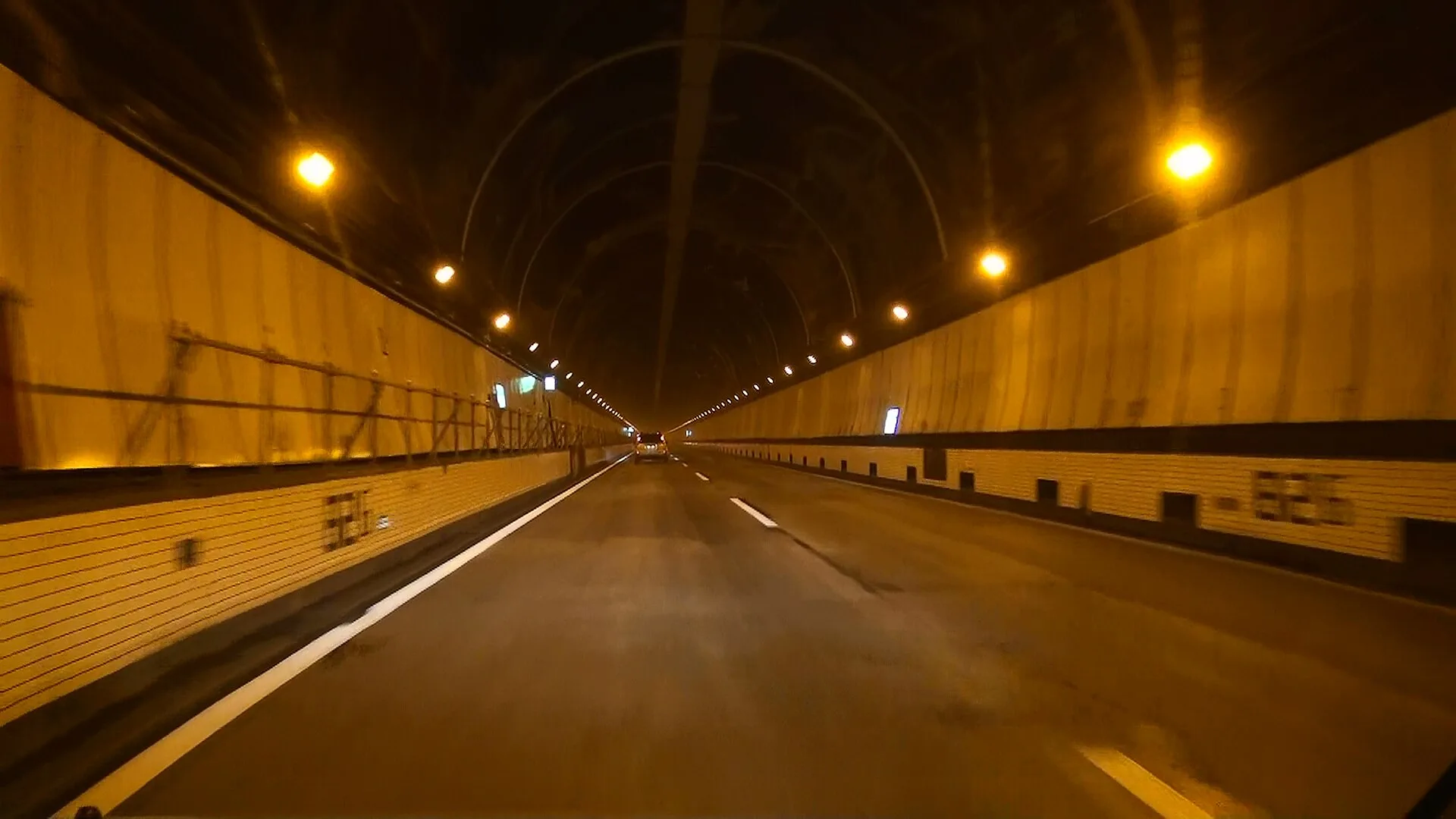
On July 10, 2006, part of the suspended ceiling in Boston’s I-90 Connector Tunnel collapsed onto a car. The passenger, Milena Del Valle, was killed. The tunnel is part of the Central Artery/Tunnel Project, commonly known as the Big Dig; this was a tunnel ceiling failure, not a bridge collapse.
The ceiling was supported by anchors fixed overhead. In its final investigation, the NTSB found that epoxy adhesive anchors used to support the ceiling lacked adequate resistance to creep under sustained load. Creep is gradual deformation over time while a material remains under load. The anchors’ failure was central to the collapse, but the investigation also examined the design and oversight decisions surrounding their use.
The NTSB identified the Massachusetts Turnpike Authority (MTA), which owned and operated the tunnel, as having failed to adequately oversee the ceiling’s design and construction. It also faulted Gannett Fleming, the design consultant, for not adequately accounting for the sustained load. Powers Fasteners supplied the epoxy adhesive anchors; the NTSB found that it did not provide adequate warnings about their limitations for sustained loading.
What the investigation record shows
The NTSB’s Structural Group Chairman Factual Report records that investigators were on scene immediately after the accident and photographed the middle row of adhesive anchors in the tunnel’s westbound lanes before ceiling panels were removed. That is a specific, documented account of scene evidence. It is not, by itself, the agency’s complete explanation of why the ceiling fell.
The NTSB final report supplies the broader causal finding. Keeping the two records distinct prevents a factual description of photographs or site work from being mistaken for an engineering conclusion. Readers looking at different documents can use official records compared to distinguish what a record documents from what a later finding concludes.
| Claim type | What the case record supports | What not to infer from it alone |
|---|---|---|
| Documented observation | Investigators photographed adhesive anchors at the scene before ceiling panels were removed. | A photograph alone establishes why an anchor failed. |
| Investigation finding | The NTSB identified inadequate creep resistance under sustained load and failures in design and oversight. | Every party had the same role or responsibility. |
| Unsupported conclusion | A claim that the collapse resulted from an unrelated bridge defect. | The I-90 event was a bridge collapse; it occurred in a tunnel. |
Claim status board
Claim
- Bridge section closed
- Confirmed
- No reported injuries
- Attributed, time-bound
- Joint shifted
- Preliminary
- Maintenance passed
- Contractor claim
- Inspection system failed
- Unsupported
Status
- Bridge section closed
- City closure order
- No reported injuries
- Emergency statement
- Joint shifted
- Engineer briefing
- Maintenance passed
- Contractor statement
- Inspection system failed
- None
Record
- Bridge section closed
- No reported injuries
- Joint shifted
- Maintenance passed
- Inspection system failed
The NTSB’s investigation process describes stages that include notification, fact gathering, analysis, a probable-cause determination, adoption of a final report, and safety recommendations. The phases can overlap, and their timing varies. This sequence describes how an investigation develops; it is not a countdown that makes early observations equivalent to final findings.
Investigation stages
- Notificationagency alerted
- Fact gatheringrecords and interviews
- Analysiswhat facts mean
- Probable causeagency determination
- Final reportadopted findings
- Safety recommendationsissued separately
The parties and their different roles
The MTA’s ownership and operating role matters because responsibility for a public project is not the same as responsibility for each technical decision. Bechtel/Parsons Brinckerhoff, a joint venture, served as program manager for the Big Dig. Gannett Fleming’s design-consultant role and Powers Fasteners’ role as the anchor supplier were different again. Naming those distinctions gives readers a map of the project without treating every organization as interchangeable.
The NTSB’s findings connected the collapse to both the anchor system’s performance under sustained load and failures in design and oversight. That account is more specific than saying that a ceiling simply “gave way,” but it does not mean that every party made the same decision or had the same responsibility. An agency’s probable-cause finding is a safety-investigation conclusion; it should not be casually recast as a court’s judgment about civil liability.
Bechtel/Parsons Brinckerhoff’s program-management role is useful context, not a substitute for the NTSB’s findings about particular design and oversight failures. When a briefing names an organization, it should state the role supported by the record and avoid implying that a contract title alone proves responsibility for a specific failure. For related pitfalls in explanatory coverage, see explanatory package problems.
What is settled—and what a briefing should not overstate
The NTSB’s final conclusion means the technical cause should not be presented as wholly unknown. The agency identified the anchors’ inadequate creep resistance under sustained load and found failures in design and oversight. By contrast, the structural factual report’s account of investigators photographing anchors documents an investigative action; that passage does not independently establish the cause.
A careful account also avoids flattening the NTSB’s findings into a claim that epoxy anchors, in every use, are unsafe. The finding concerns the system used to support this tunnel ceiling under its sustained load. Nor does identifying the NTSB’s safety conclusion establish, by itself, that all participants shared equal responsibility or resolve every separate legal question.
A background package should keep the event, the evidence, and the agency’s conclusion visible as distinct parts of the story. It should name the person killed, identify the tunnel and project, explain the roles of the MTA, Bechtel/Parsons Brinckerhoff, Gannett Fleming, and Powers Fasteners, and accurately state the NTSB’s cause finding. That approach is more useful than a loose collection of project history or a claim that the cause remains unknown.
When a case briefing needs an update
A historical briefing should be checked when a new or corrected record materially changes what it says. Updates should identify the affected claim, rather than silently altering the account or suggesting that an established finding has become uncertain without evidence.
- A cited NTSB record is corrected or superseded.
- A newly reviewed record changes the description of the ceiling or anchor system.
- A reliable correction changes a stated name, role, or event detail.
- A new authoritative finding materially changes the account of cause or responsibility.
- The briefing’s wording no longer matches the record it cites.
- A reader-facing explanation mistakes an observation for a final finding.
Update triggers
- Closure or detour changes
- Measurements or photographs published
- Inspection records arrive
- Investigation names scope
- Preliminary or final report
- Court or contract action
These are editorial checks, not claims that a new investigation is underway. If an update changes the account of the cause, explain what changed and identify the finding that supports the revision. If it only corrects a name or a description of a document, make that limited correction without rewriting the event’s established history.