

Guides
Canadian Dental Care Plan Eligibility: Who Qualifies
Canadian Dental Care Plan eligibility requires family net income under $90,000 and no private dental coverage, with co-payments based on income.
What to take away
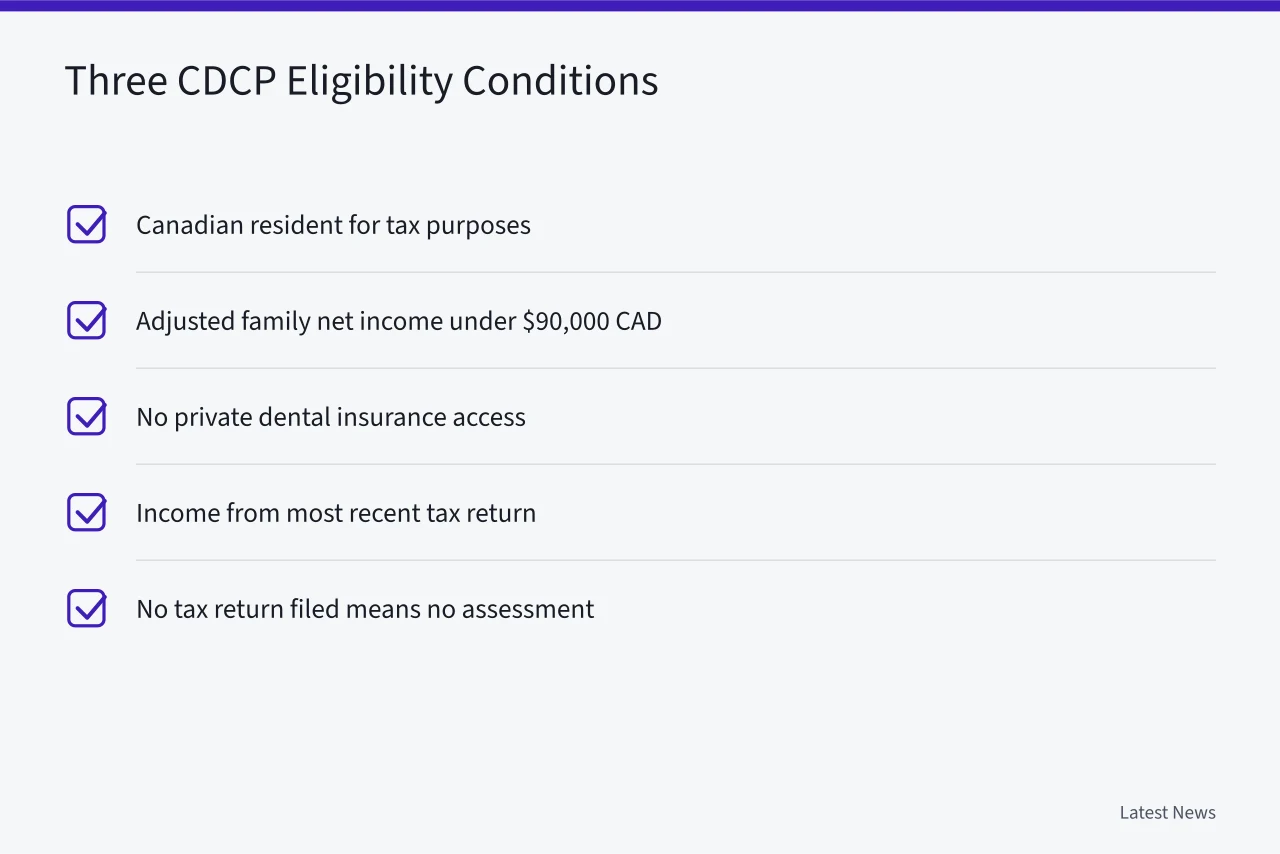
- You qualify only if three things are true on the day you apply: Canadian residence for tax purposes, adjusted family net income under $90,000 CAD, and no private dental insurance.
- Co-payments run 0% under $70,000, 40% from $70,000 to $79,999, and 60% from $80,000 to $89,999 for the 2025 plan year.
- Provinces and territories do not decide Canadian Dental Care Plan eligibility, and they do not approve or deny applications.
- Ask for written confirmation of enrolment before treatment. It names your coverage start date, income tier and co-payment.
- Crowns, bridges, dentures and root canal therapy normally require preauthorization. Checkups and basic fillings do not.
Three conditions checked on application day
The federal test asks three questions, all on the day you apply. First, residence in Canada for tax purposes. Second, adjusted family net income under $90,000 CAD. Third, no access to private dental insurance through an employer, a spouse or a parent.
The income figure comes from your most recent filed tax return. No filed return means no assessment, so the file waits until the Canada Revenue Agency has one.
Registration runs through the federal system, not a provincial health card office. Which level of government sets the rules is covered in federal and provincial jurisdiction in Canada, where the split decides who can legislate what.
The official CDCP page lists the current criteria and the program year they apply to.
Income tiers and your share of the cost
The plan does not carry the whole bill at every income level. Your share climbs with income and stops at $90,000.
| Adjusted family net income (CAD) | You pay | The plan pays |
|---|---|---|
| Under $70,000 | 0% | 100% |
| $70,000 to $79,999 | 40% | 60% |
| $80,000 to $89,999 | 60% | 40% |
| $90,000 or more | Not eligible | Not eligible |
These percentages apply to the plan's established fee. A provider outside the plan may bill you privately.
Services the CDCP covers
The published list runs from prevention to oral surgery. It typically includes exams, x-rays, cleanings, fluoride, sealants, fillings, extractions, root canal therapy, gum treatment and dentures.
Some prosthodontics and limited orthodontics are covered for certain groups. Coverage has widened in stages since the rollout, which the overview of the plan's history tracks.
Preauthorization is the gate for major work. Crowns, bridges, dentures, root canal therapy and orthodontics normally need approval before treatment starts. Routine preventive and basic restorative care normally does not.
What provinces do and do not decide
Provinces and territories fund their own dental programs under their own rules, with their own age limits, income tests and application routes. Those rules are set by each province, not by the federal plan, so a provincial office cannot tell you whether you qualify for the CDCP.
These programs are separate from the CDCP in law and in budget. A resident can be approved for one and refused by the other.
Provincial staff cannot approve a federal application. A provincial health card is not proof of enrolment.
If a provincial program states your status over the phone, finding the right custodian for the record is how you get that answer in writing.
Questions to ask before you book
- What adjusted family net income tier does the plan have for me this year?
- Does any plan I hold pay for dental services, including cleanings?
- Has my tax return for the assessed year been filed and assessed?
- What co-payment percentage will I pay, and can I have that in writing?
Write down each answer and the date you received it. Where a call centre answer conflicts with the federal page, the federal page wins. Keep that note with your tax return, because both documents are read together if a claim is questioned.
Documents to request before you accept an answer
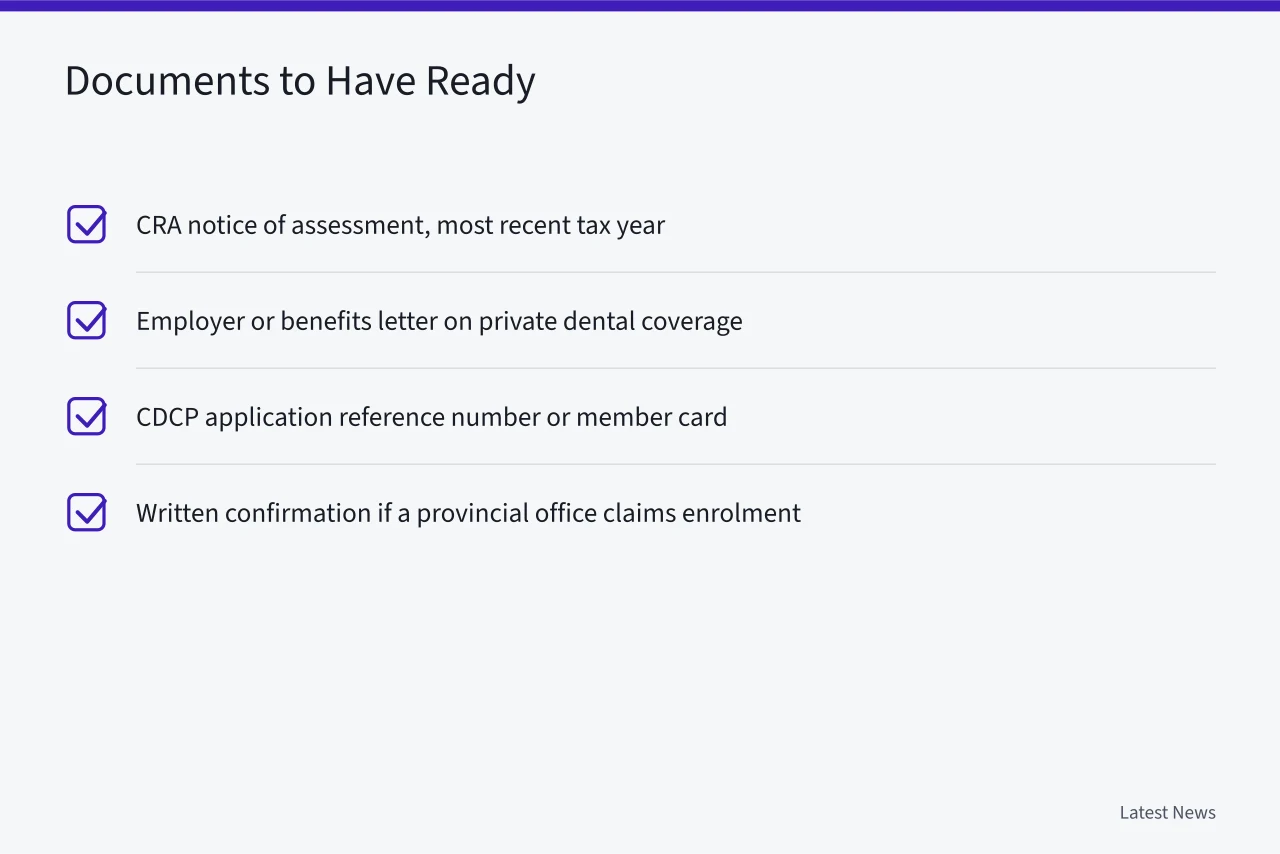
- The written confirmation of enrolment, naming your coverage start date.
- The income tier and co-payment percentage applied to you.
- A statement that no private dental coverage was declared.
- Your plan member card, which is not a provincial health card.
Keep copies. If a federal office will not put an answer in writing, the request route is set out in how to file an access to information request in Canada. The 30-day response clock comes from the Access to Information Act.
Answers that disqualify you
- "You can pay today and claim the money back later." The plan does not reimburse private payments.
- "Your provincial health card is enough." Provincial cards play no part in the CDCP.
- "Your income is near the limit, so we can adjust it." No tier exists above $90,000.
Any one of these answers ends the process. Paying privately does not create later coverage, and a second call to Service Canada confirms the same fact.