Guides
How to File an Access to Information Request in Canada: Timelines, Fees, and Appeals
Access to information request Canada fees start at $5 and run to $25 per hour after search time, with provinces setting their own timelines and appeal routes.
What to take away
- The federal Access to Information Act sets a $5 application fee and lets institutions charge $10 per hour for search and preparation after the first five free hours, as published on Canada.ca.
- Institutions must respond within 30 calendar days, but extensions of 30 days or longer are routine when records are voluminous or need consultation.
- Provincial regimes differ sharply: Ontario charges $5 and sets a 30-day clock, while some provinces charge nothing and set different deadlines. Confirm the province before you file.
- The Information Commissioner of Canada can investigate complaints, but the commissioner cannot order a release. Only the Federal Court can do that.
- Ask what a fee estimate covers and whether the search time is capped before you accept it, because an uncapped estimate is the most common way a request stalls.
Where the federal rules actually bite
The federal Access to Information Act applies to roughly 265 institutions, from departments to Crown corporations. The statute itself is short on procedure and long on exemptions, so the practical questions sit in the regulations and in Treasury Board guidance.
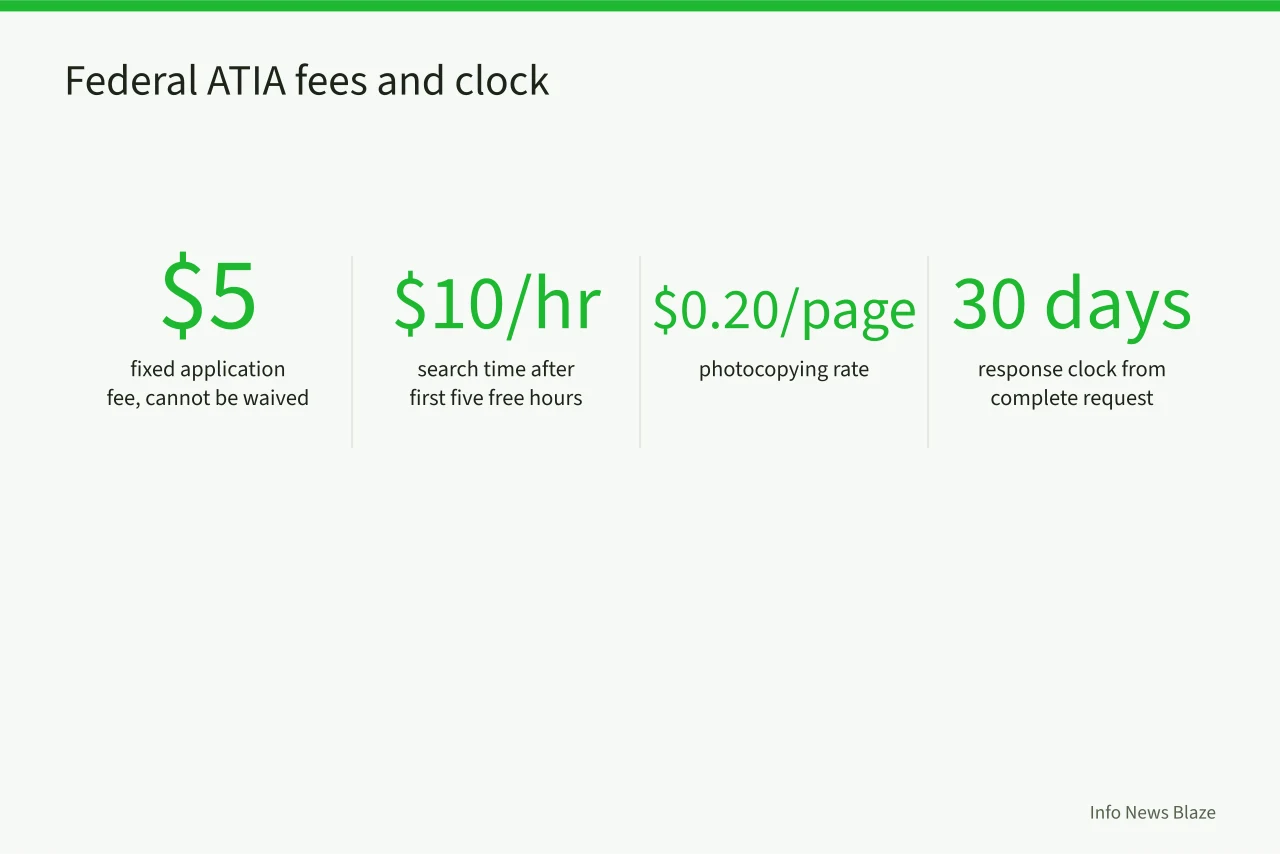
Fees are the first sticking point. The $5 application fee is fixed and cannot be waived. Search and preparation time is free for the first five hours, then billed at $10 per hour. Photocopying runs at $0.20 per page. If you are requesting your own personal information under the Privacy Act, the rules differ and most fees disappear.
Timelines are the second sticking point. The 30-day clock starts when the institution receives a complete request, not when you mail it. An institution can extend by 30 days or more under section 9, and it must tell you why. A notice that says "consultations required" without naming the body is worth challenging.
Questions to ask before you file
The choice here is not a vendor. It is which regime, which institution, and which framing will get you records inside a reasonable time. Ask these of yourself and of the access coordinator.
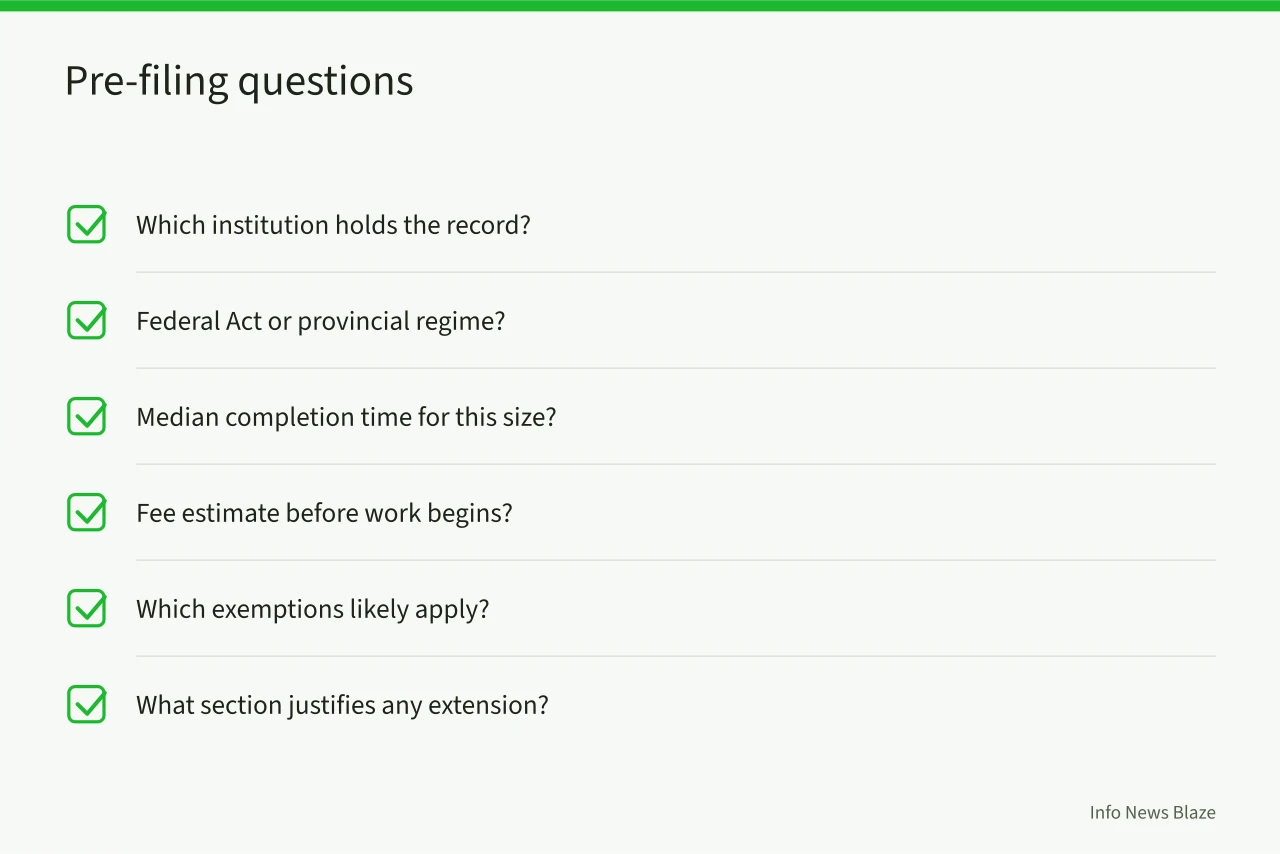
- "Which institution actually holds the record, and is it subject to the federal Act or a provincial one?"
- "What is your current median completion time for requests of this size?"
- "Will you provide a fee estimate before doing the work, and can we narrow the scope to stay under $100?"
- "Which exemptions are you most likely to apply, and can you sever the rest?"
- "If you extend the deadline, what specific section are you relying on?"
Answers that should end the conversation
Three responses tell you the request is going nowhere in its current shape.
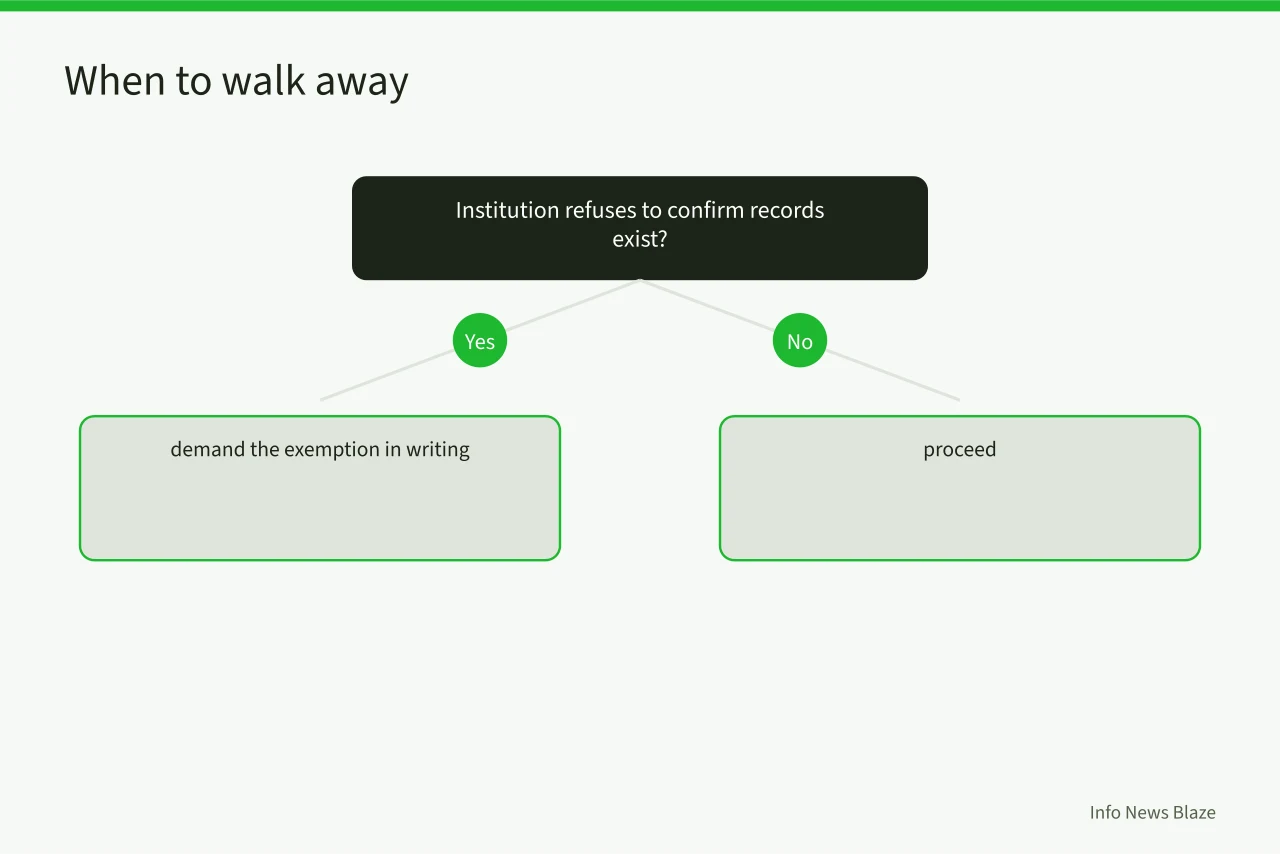
- "We cannot confirm or deny whether records exist." That is a refusal under section 10 and it is rarely the last word. Ask for the exemption cited in writing.
- "The fee estimate is $3,000 and we will not narrow it." If the institution refuses to discuss scope, you are buying a fight, not records. Consider a narrower request or a complaint to the Information Commissioner.
- "We do not track completion times." Every institution subject to the Act reports statistics to Treasury Board. The 2023-24 federal statistics show wide variation between departments, and an institution claiming ignorance of its own numbers is stalling.
A request that arrives without a stated scope invites an estimate built on the widest possible reading of your words.
What the agreement must say
When you accept a fee estimate, treat it as a short contract. It should state the hourly rate, the estimated hours, the page count, and the deposit amount. It should also state that no further charges apply without a revised estimate.
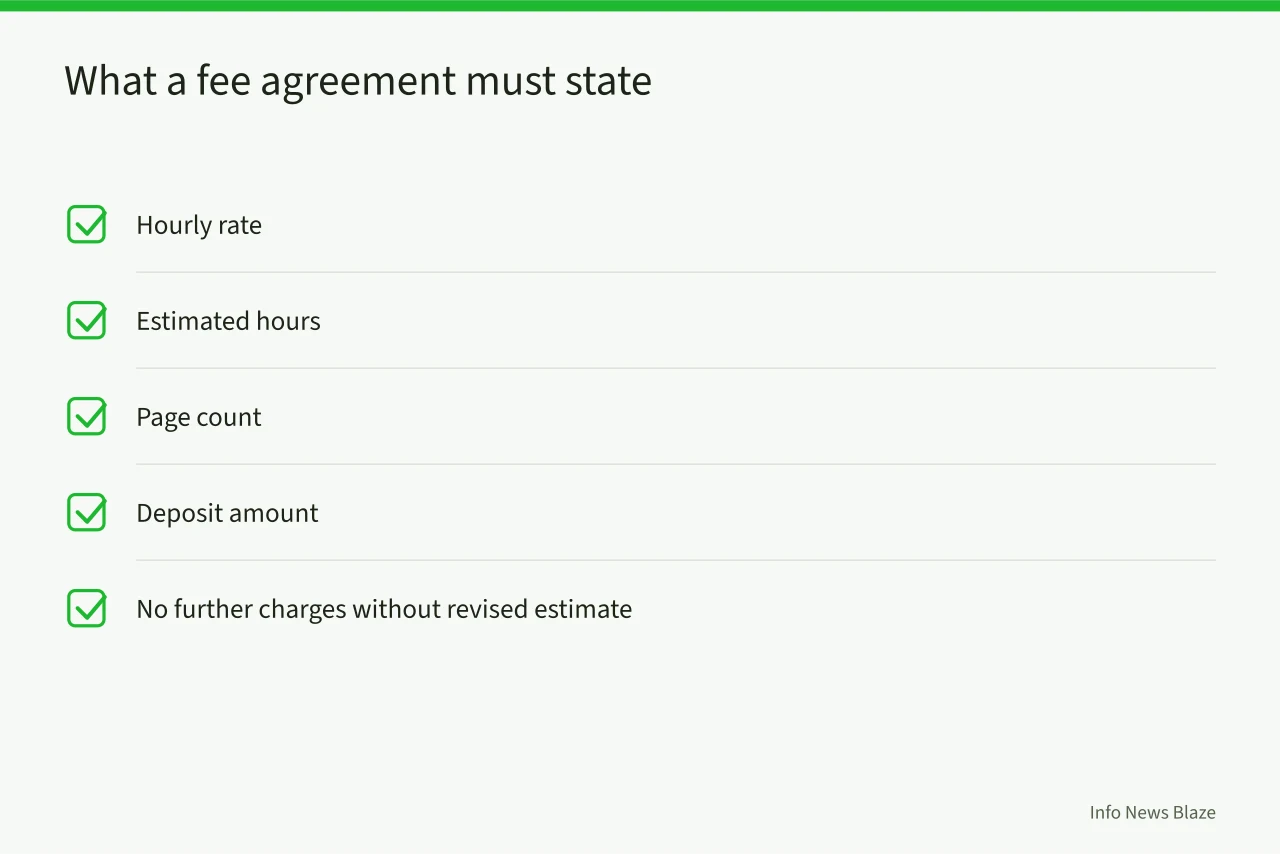
Federal institutions may require a deposit of 50 per cent when the estimate exceeds $100. Ask for the estimate in writing by email so the record is clean. If the institution later bills more than the estimate, you can refuse to pay the difference and complain.
How appeals work in practice
The federal route runs through the Office of the Information Commissioner. You must complain within 60 days of the response, or of the deadline passing. The commissioner investigates, mediates, and can issue findings, but the power to order disclosure rests with the Federal Court under section 41.
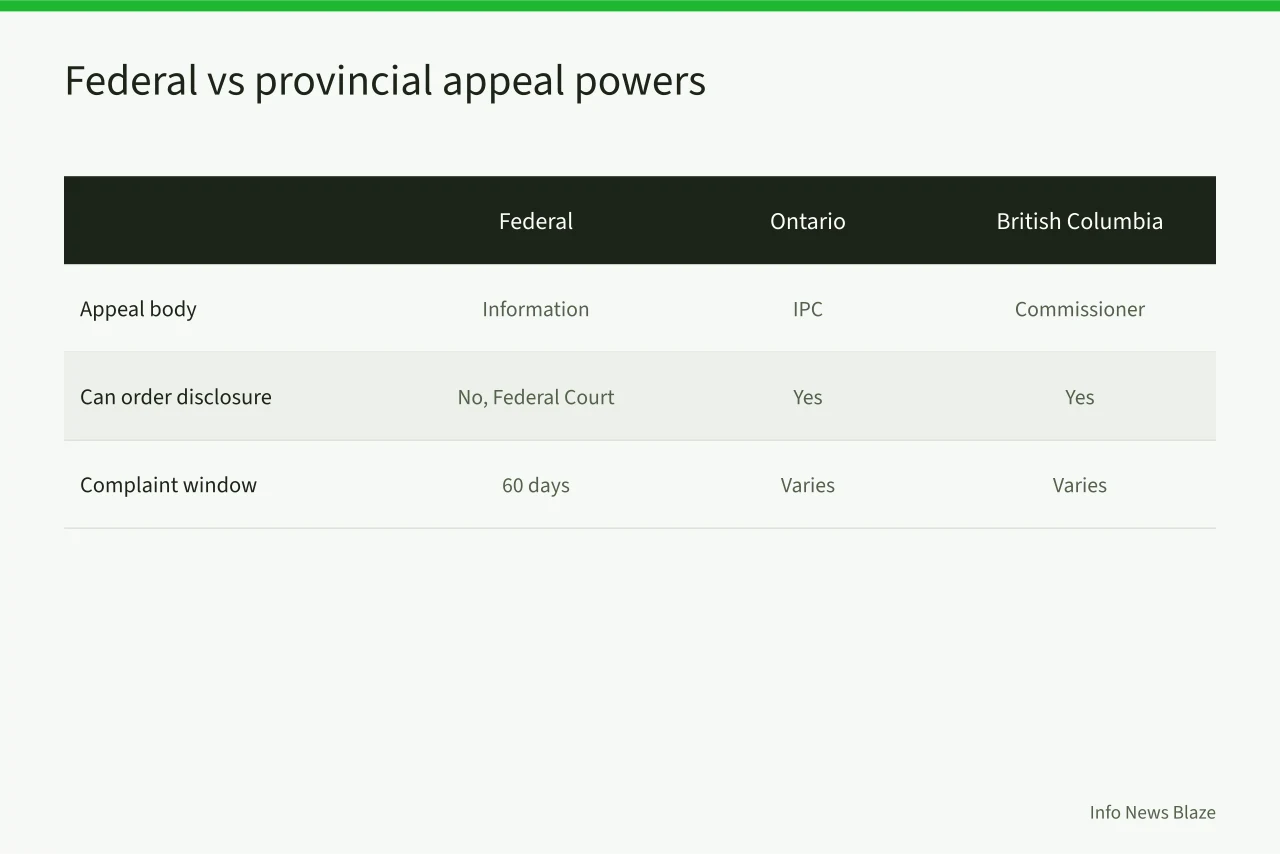
Provincial routes vary. Ontario's Information and Privacy Commissioner can issue orders that bind institutions. British Columbia's commissioner can also order disclosure. Alberta's commissioner issues orders too. That difference matters when you pick which government to ask.
If your request crosses into U.S. federal records, the appeal mechanics differ in ways worth understanding before you file, and our guide to how FOIA requests work sets out the exemption categories agencies lean on.
Example: narrowing a stalled request
A reporter asks a federal department for all correspondence about a program over three years. The estimate comes back at $2,400. The reporter rewrites the request to cover six named officials and a four-month window. The new estimate is $180, the records arrive in 41 days, and the central documents are intact.
Comparing the federal and provincial clocks
| Regime | Application fee | Standard response | Appeal body |
|---|---|---|---|
| Federal | $5 | 30 days | Information Commissioner, then Federal Court |
| Ontario | $5 | 30 days | Information and Privacy Commissioner (orders binding) |
| British Columbia | None | 30 business days | Commissioner (orders binding) |
| Alberta | $25 initial fee | 30 days | Commissioner (orders binding) |
| Quebec | None | 20 days | Commission d'acces a l'information |
Figures above reflect published fee schedules as of 2024 and should be checked against the current statute before filing. The federal text is at the Access to Information Act, and the Canada.ca access to information page carries the current fee schedule and complaint form.
Readers comparing how different jurisdictions treat disclosure will find the same tension in U.S. privacy rules versus Canadian law, where the two regimes diverge on what counts as personal information.
Common questions
How long does a federal request really take? The statutory answer is 30 days. In practice, extensions are common and complex files can run six months or more. Ask for the median completion time for comparable requests before you file.
Can I get the fee waived? The $5 application fee cannot be waived. Search and preparation fees can sometimes be reduced if you show the request is in the public interest, but the test is narrow and applied case by case.
What happens if the institution misses the deadline? You can complain to the Information Commissioner as a deemed refusal. That complaint preserves your appeal rights and often produces the records faster than a court application would.
Do I need a lawyer to appeal? No. Complaints to the commissioner are free and informal. A Federal Court application under section 41 is a different matter and usually benefits from counsel.