Guides
How to Track a Federal Bill in Congress: Status, Committee, and Floor Timeline
Track a federal bill through Congress.gov: status codes, committee referral, markup, and floor scheduling, with the real wait times at each stage.
What to take away
- A bill's status is a position in a queue, not a verdict. The nine House and Senate actions on Congress.gov tell you which queue it sits in.
- Committee referral is the longest stage. Most bills die there without a recorded vote, and no calendar forces a markup.
- The text you are tracking changes. Introduced text, reported text, and engrossed text are different documents with the same bill number.
- Floor time is controlled by leadership, not by the committee that approved the bill. A clean committee report is a prerequisite, not a guarantee.
- Track three things at once: the bill page, the committee calendar, and the floor schedule for that chamber.
Stage by stage
The House and Senate each publish a short list of actions a bill can carry. GovInfo's bill status help page explains the version codes, and the Senate's legislative process briefing walks the same path from introduction to law. Read both before you trust a status label.
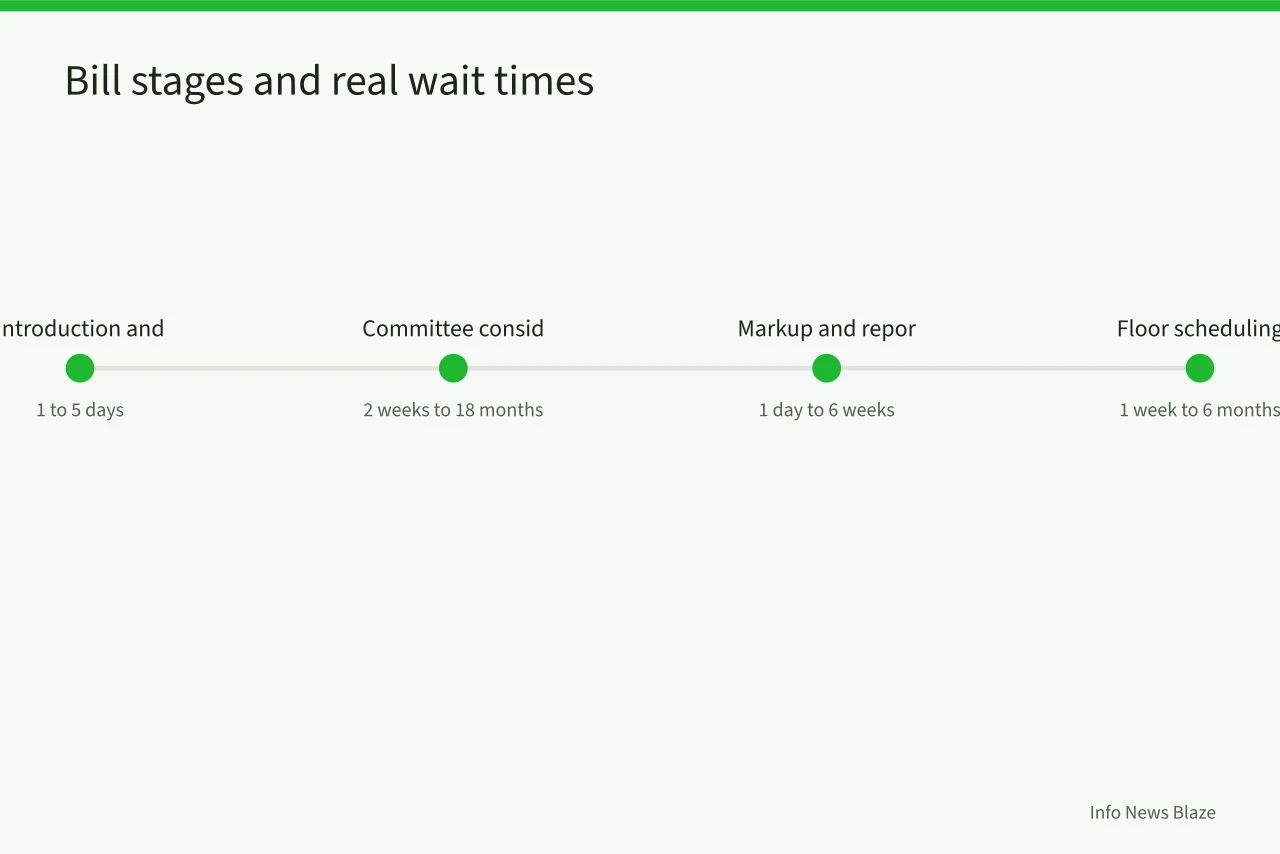
Introduction and referral, 1 to 5 days. The sponsor drops the bill, the Parliamentarian or the Speaker's office assigns it to one or more committees, and the bill page updates. Multiple referrals are common on tax, energy, and health bills because jurisdiction overlaps.
Committee consideration, 2 weeks to 18 months. This is where the schedule is least predictable. A subcommittee may hold a hearing, then a markup, then report the bill to the full committee. Any of those steps can be skipped. Bills referred to two committees can sit in one and move in the other.
Markup and report, 1 day to 6 weeks. The markup itself is short, often a single session. The committee report that follows takes longer to file, and the reported text is what the floor will use.
Floor scheduling, 1 week to 6 months. The majority leader or the Speaker's office decides. Under regular order the House Rules Committee grants a rule that sets debate time and which amendments are in order.
The status codes you will actually see
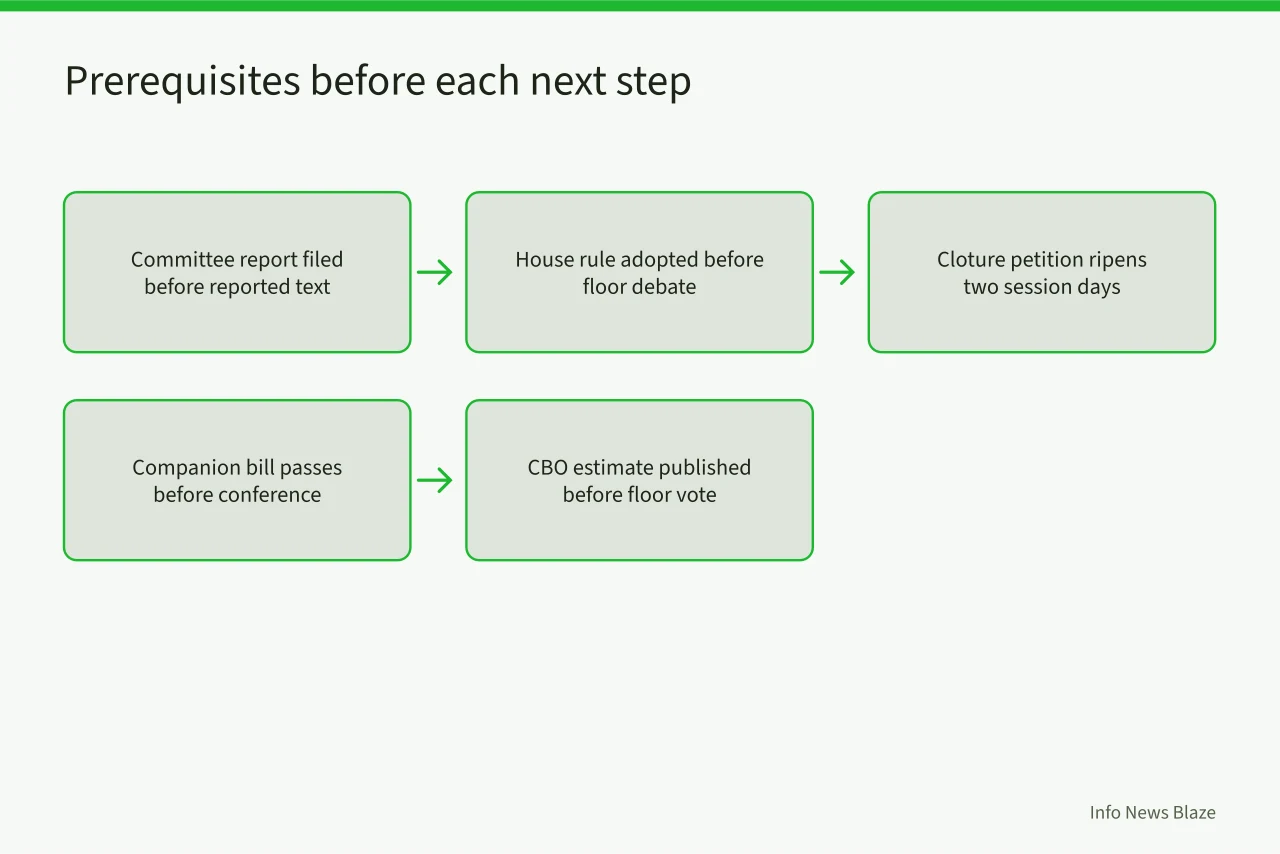
| Status label | What it means | Where it is recorded |
|---|---|---|
| Introduced | Referred to committee, no action yet | Bill page, committee referral line |
| Reported | Committee approved and filed its report | Committee report number |
| Placed on calendar | Waiting for floor time | Union Calendar or Senate Calendar |
| Passed chamber | One chamber agreed to the text | Engrossed version |
| Referred to second chamber | Sent across for the same process | New referral line |
A status change can lag the event by a day or two. Committee press releases and the daily Congressional Record often carry the news first.
What has to exist before what
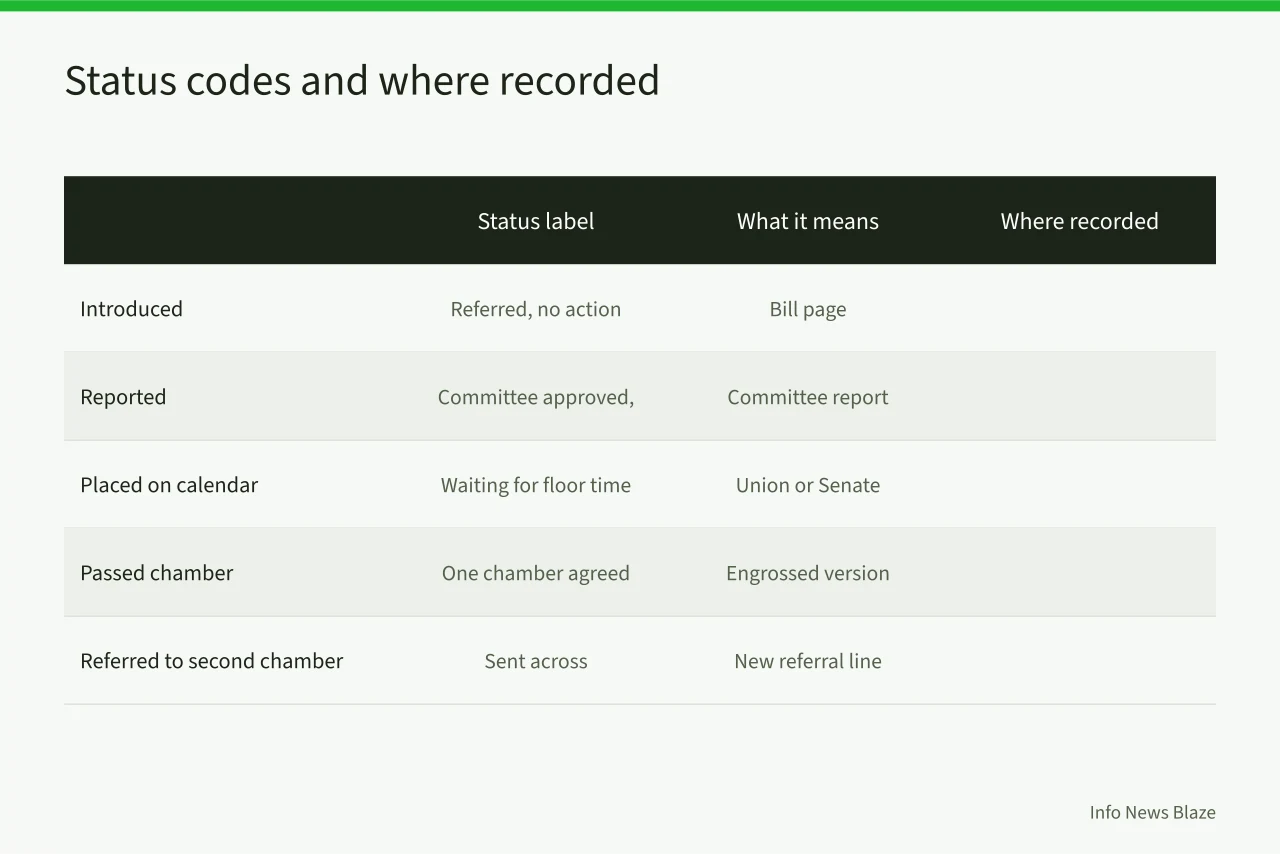
- A committee report must be filed before the reported text is available. Without it, you are still reading introduced text.
- A rule from the House Rules Committee must be adopted before most House floor debate on a major bill. No rule, no scheduled vote.
- A Senate cloture petition must ripen for two session days before the vote that ends debate. That two-day interval is a hard prerequisite, not a formality.
- A companion bill in the other chamber must pass before conference or amendment exchange can start.
- A Congressional Budget Office cost estimate must be published before a floor vote on bills with budgetary effects, which is most of them.
The blocker to watch: no committee report, no floor. A bill marked "ordered reported" has cleared the committee vote but is not yet reported. That gap can run weeks, and nothing on the calendar closes it.
Where it stalls
The named failure mode is the silent death in committee. A bill gets a hearing, gets press coverage, and never receives a markup. The cause is usually a chair who will not schedule one, often because the votes are not there or because a competing bill holds the queue.
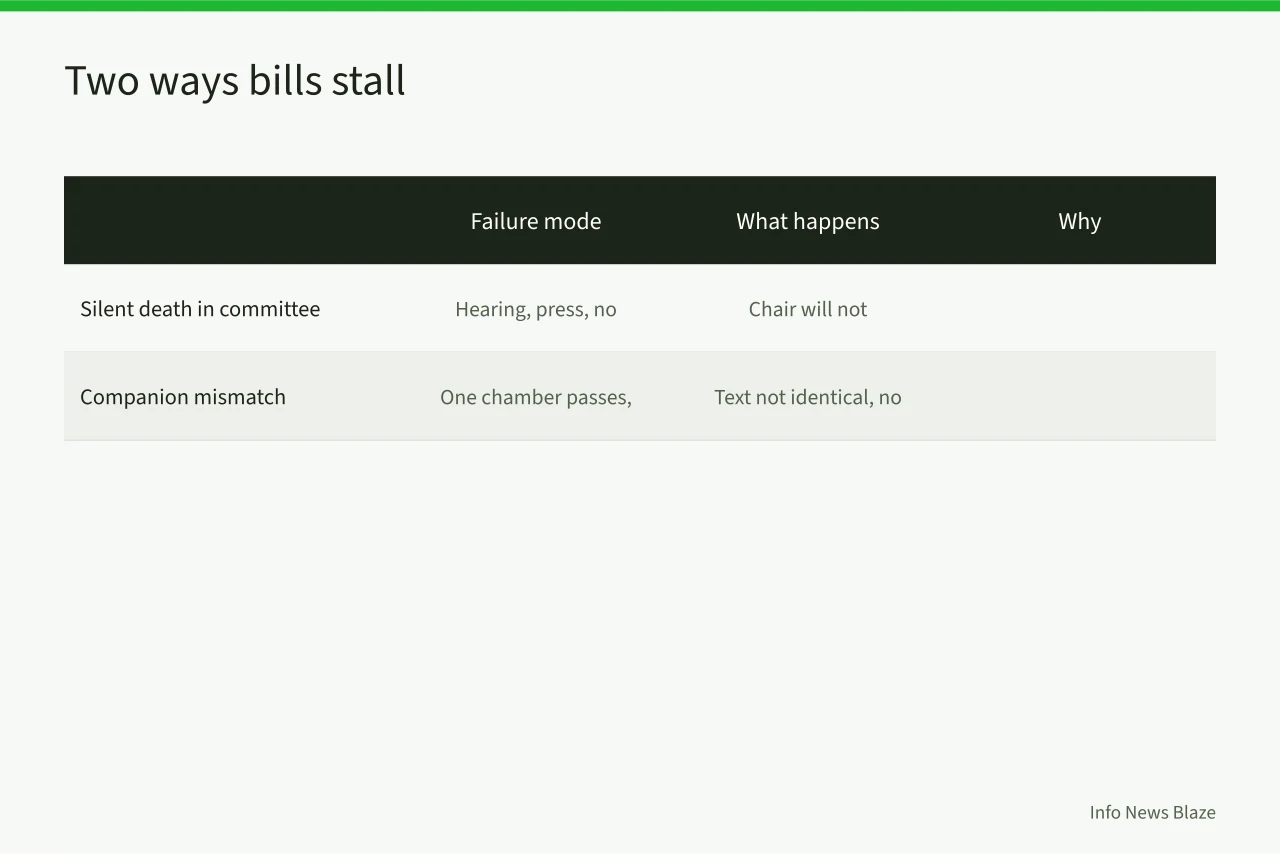
The second failure is the companion mismatch. A House bill passes and the Senate version never moves, so the text is not identical and no conference is called. Readers tracking one bill number miss that the action moved to the other chamber's companion.
What to do while waiting
- Save the bill page and check the actions tab weekly, not daily.
- Read the committee's own calendar, which lists markups before the bill page updates.
- Check the floor schedule for the chamber that holds the bill.
- Read the Congressional Budget Office estimate once it appears.
- Compare introduced and reported text side by side if the bill moves.
For a worked example of how a local body handles the same steps, see Reading a New York City council bill, which shows the referral and hearing sequence at city scale. If your bill touches health programs, the FOIA request process is the route to the agency documents behind the estimates. Bills with disclosure provisions often track back to the SEC filing rules that set the underlying reporting duties. When a rule's effective date is the real story, whether the compliance date mattered is worth reading alongside the bill text.
Common questions
How often does Congress.gov update a bill page? Usually within one business day of the action, sometimes faster. Committee calendars and the daily Congressional Record are the earlier signals.
What is the difference between ordered reported and reported? Ordered reported means the committee voted to advance the bill. Reported means the committee filed its written report. Only the second one puts text on the floor calendar.
Can a bill skip committee? Yes. Leadership can bring a bill directly to the floor under a rule, and the Senate can take up a House-passed bill without a fresh referral. It is uncommon on major legislation.
How long can a bill stay alive? A bill dies at the end of the two-year Congress in which it was introduced. A new Congress requires reintroduction with a new number.