Guides
How to Appeal a FOIA Denial: Deadlines, Exemptions, and Agency Contacts
Appeal a FOIA denial by naming the exemption, meeting your agency deadline, keeping proof of submission, and asking OGIS for help before you decide to sue.
What to take away
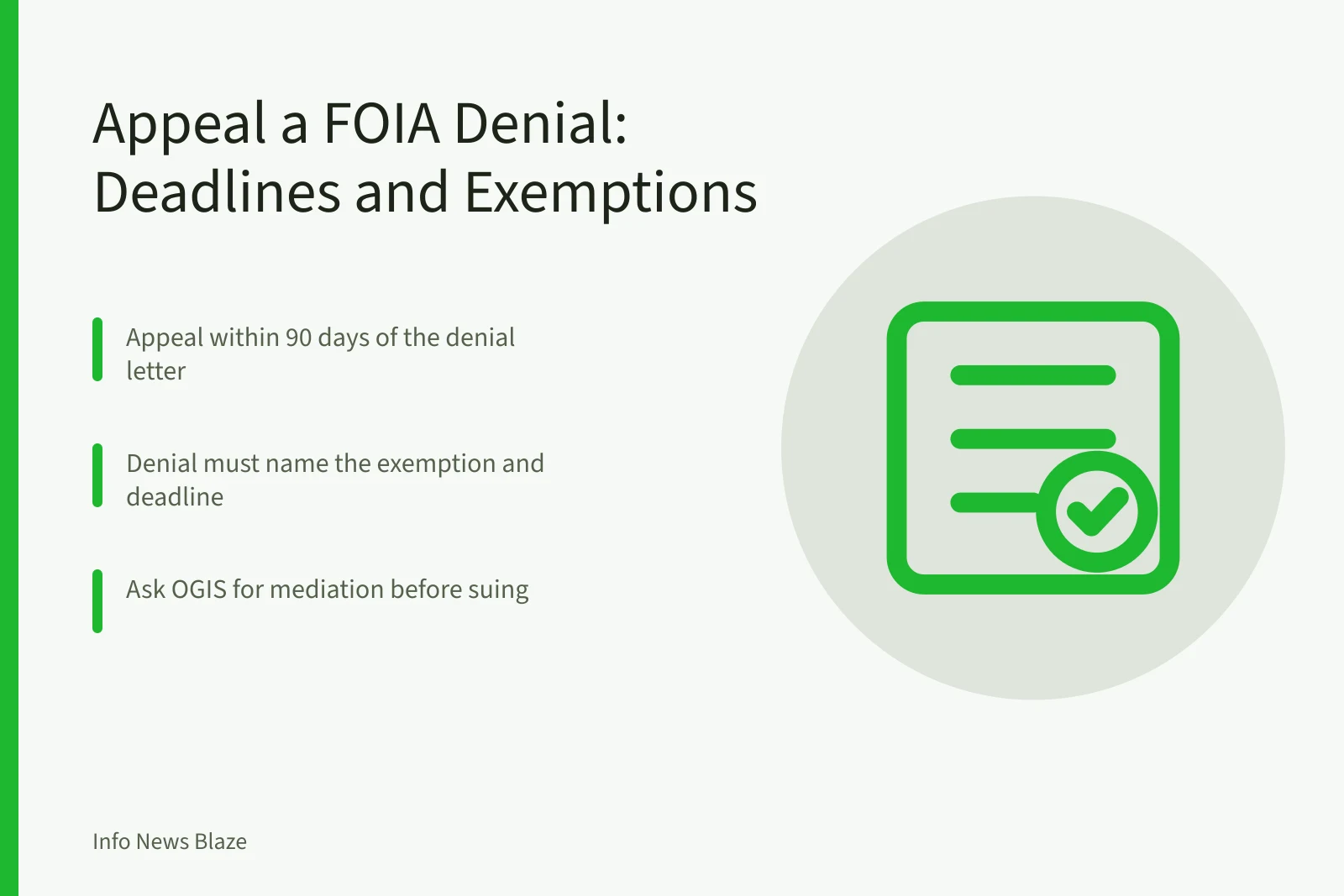
- Most federal FOIA denials can be appealed to the agency that denied the request, usually within 90 days of the denial letter.
- A compliant denial letter must name the exemption, explain why it applies, and state the appeal deadline and address.
- You should keep the denial letter, the original request, proof of submission, and any agency follow-up.
- If the agency upholds the denial, you can ask OGIS for mediation or file suit in federal district court.
If you received a "no records" response or a partial denial from a federal agency, the clock is already running. The denial letter is more than a refusal. It carries the official notice of your appeal right. It also lists the specific exemption and the agency's appeal address. Read it with the nine FOIA exemptions in front of you, then act before the deadline passes.
The administrative appeal deadline
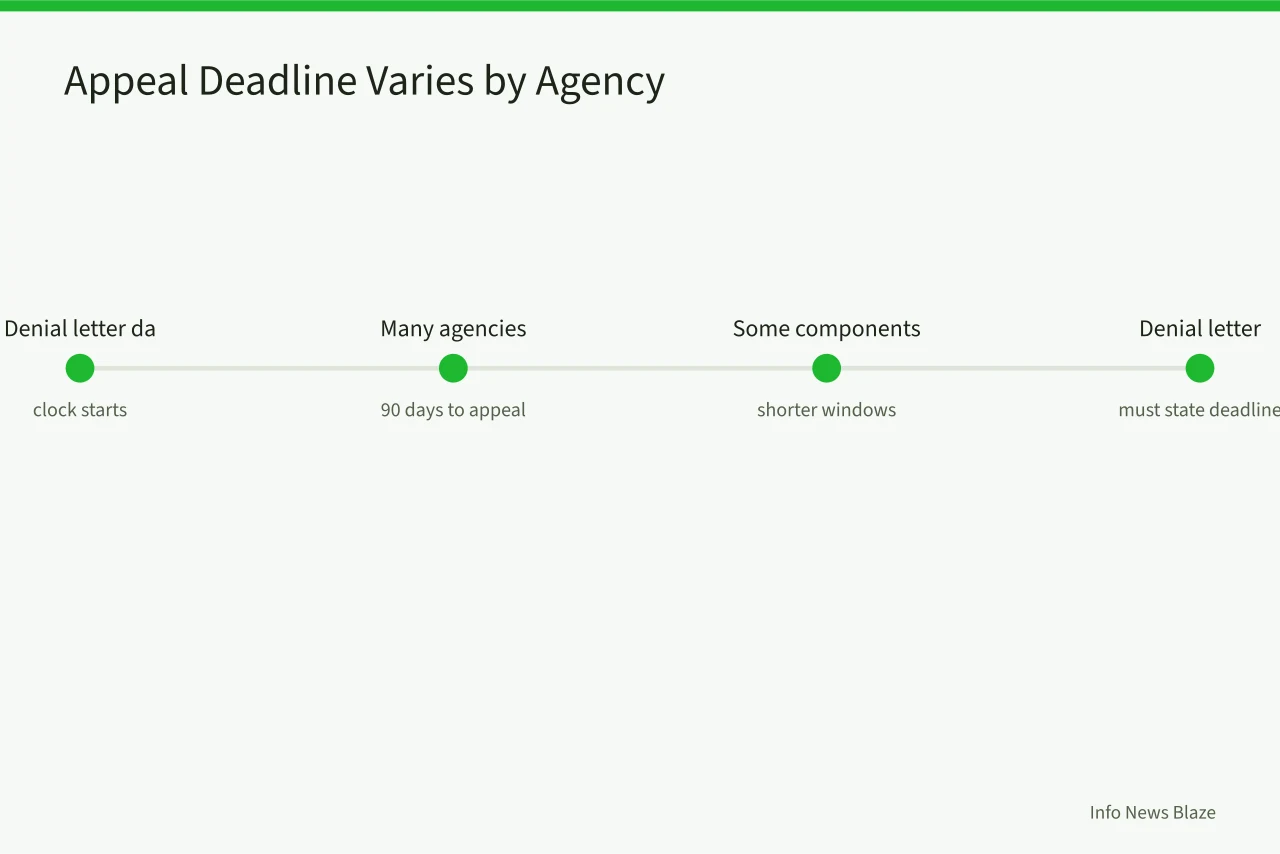
A federal agency must tell you how long you have to appeal. Many agencies use 90 days from the date of the denial letter, but some components set shorter windows. Do not assume one agency's deadline matches another. The government-wide FOIA FAQ explains that the denial letter itself must notify you of your appeal right and the deadline.
FOIA exemptions behind denials
The nine exemptions are the only legal grounds a federal agency may use to withhold records. They are listed in 5 U.S.C. 552(b). A denial letter that cites no exemption, or cites an exemption that does not fit the record, can be challenged in an appeal.
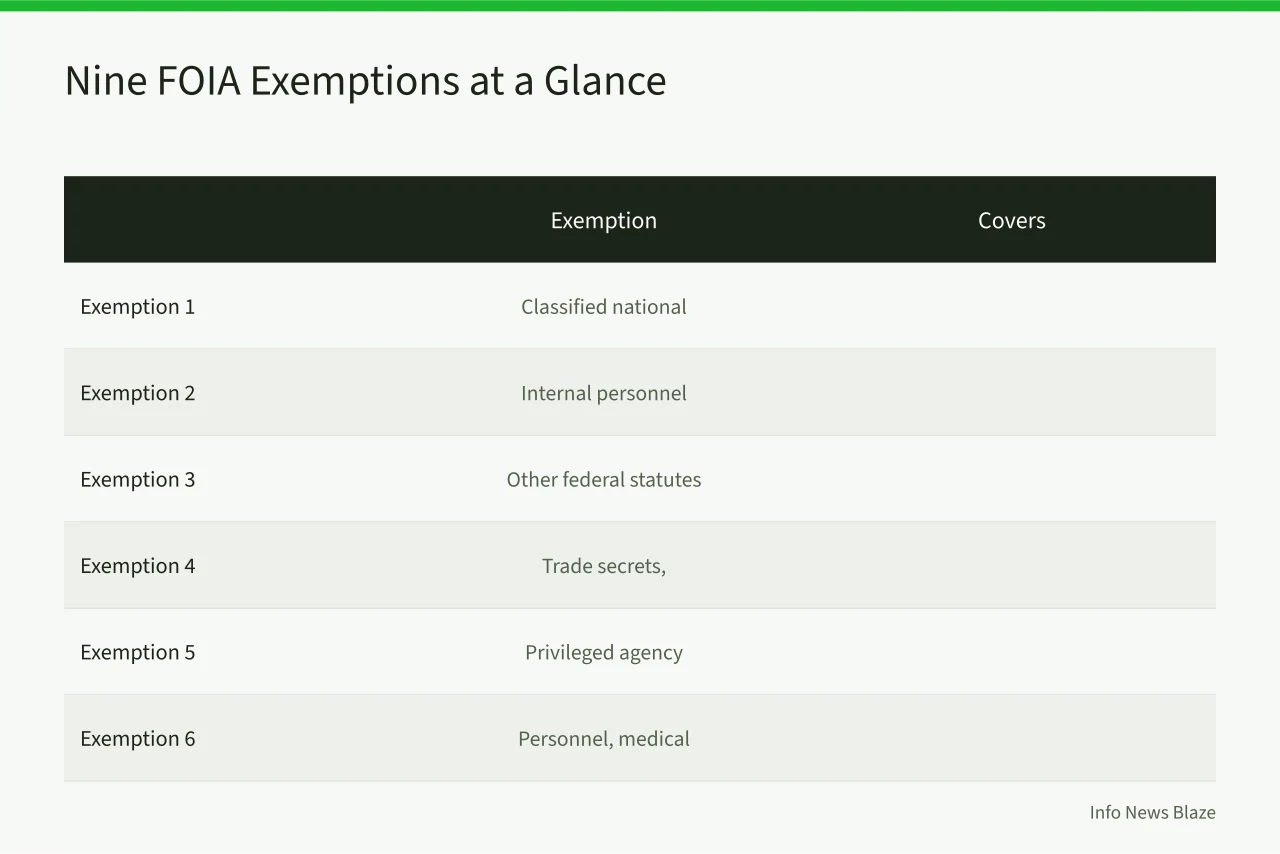
| Exemption | What it covers |
|---|---|
| Exemption 1 | Classified national security information |
| Exemption 2 | Internal agency personnel rules and practices |
| Exemption 3 | Records protected by other federal statutes |
| Exemption 4 | Trade secrets and confidential commercial information |
| Exemption 5 | Privileged inter-agency or intra-agency memos |
| Exemption 6 | Personnel and medical files whose disclosure would invade personal privacy |
| Exemption 7 | Law enforcement records that could harm an investigation or fair trial |
| Exemption 8 | Financial institution examination reports |
| Exemption 9 | Geological and geophysical information about wells |
Agencies must also release any reasonably segregable non-exempt portion of a record. For example, a memo with a few exempt paragraphs must still disclose the rest. If the agency withholds whole pages without explaining why non-exempt material cannot be separated, that is a common ground for appeal. For records involving medical details, Exemption 6 protects personal privacy. Health agencies may weigh HHS HIPAA guidance when deciding whether a patient-level file can be released or must be segregated.
Agency contacts and where to send an appeal
Your denial letter should give the address, email, or online portal for administrative appeals. If it does not, go to the agency's FOIA office on FOIA.gov. Include the request number exactly as it appears on the denial letter. Send a copy of the original request and the denial letter itself. Keep a receipt or timestamp.
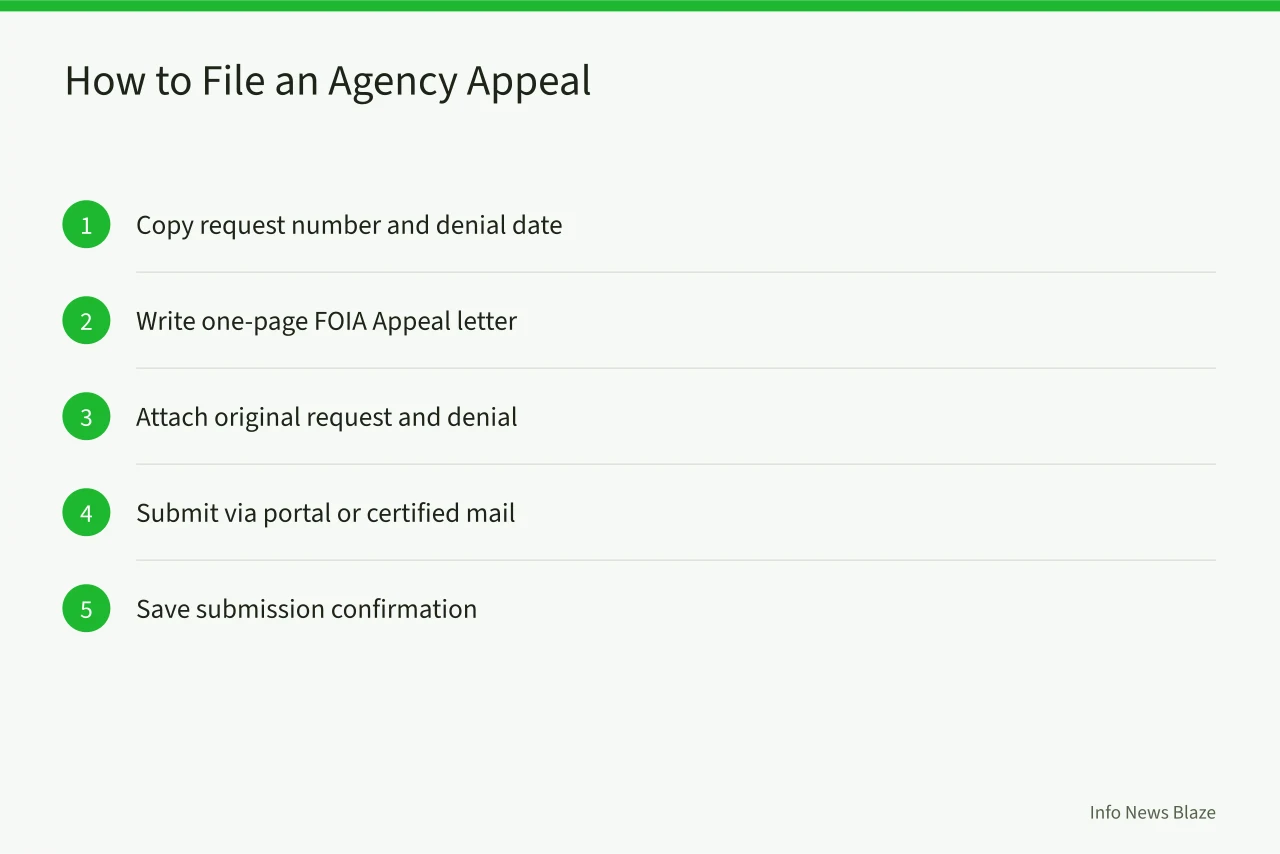
To file an agency appeal:
- Copy the request number and the date of the denial letter.
- Write a one-page letter headed "FOIA Appeal" that states the request number and the exemption you are challenging.
- Attach the original request and denial letter, then submit through the portal or certified mail.
- Save the submission confirmation for your records.
For a broader look at initial requests and withholding rules, see FOIA requests work.
What a compliant appeal letter contains
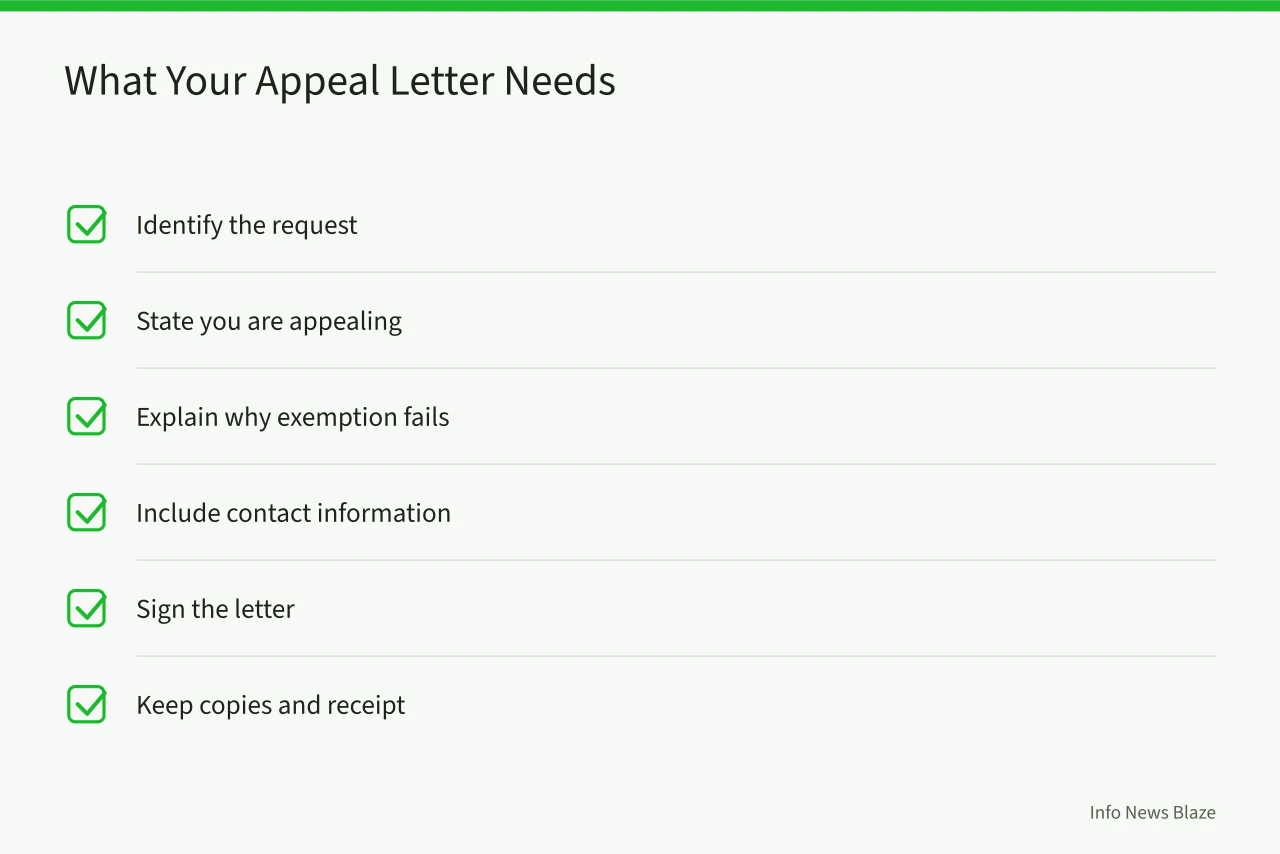
The letter need not be long. It should identify the request, state that you are appealing the denial, and explain briefly why the exemption does not apply. For example, if the agency cited Exemption 5 for predecisional memos, you might argue that the record is a final decision, not a draft. Include your contact information and sign it. The appeal goes to the agency head or the official named in the denial letter. Keep a copy of the appeal letter, the denial letter, and the submission receipt together.
Do not file a new FOIA request when you disagree with a denial. An appeal is the correct path, and a new request restarts the clock and may produce the same withheld records.
If your denied request asked for company filings, see SEC filings explained before you challenge Exemption 4 arguments.
What happens if you do not meet the deadline
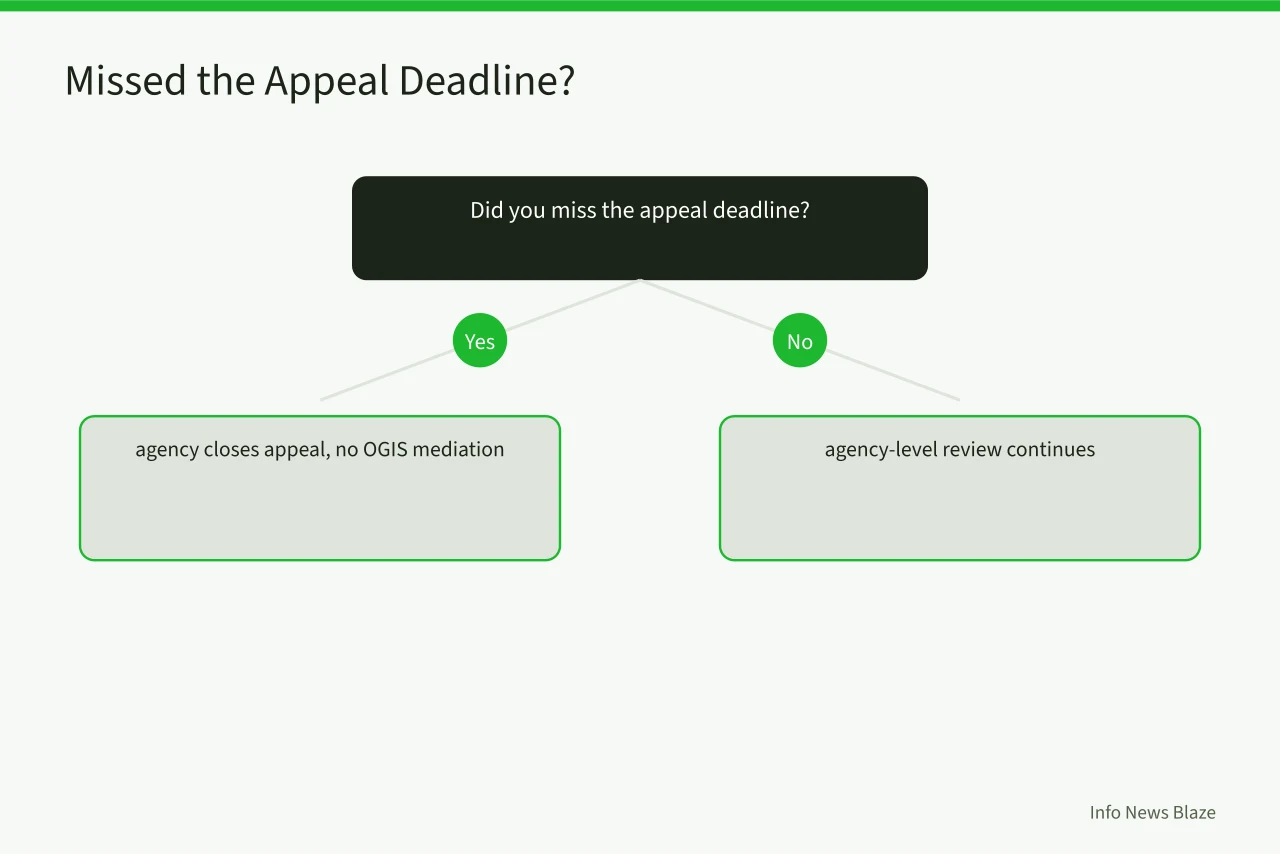
If you miss the appeal deadline, the agency will close your appeal without a decision. You will not get OGIS mediation unless you can show exceptional circumstances, because OGIS generally expects you to exhaust administrative remedies. In practice, that means you must either file a new FOIA request and wait again, or go directly to federal district court. Courts often require administrative exhaustion before you sue, so the missed deadline can weaken your case. That is the concrete consequence: the right to an agency-level review ends when the deadline passes, and you may lose the easiest route to reversing a weak denial.
Where federal and state rules differ
The federal FOIA applies to executive branch departments and agencies, not to Congress, federal courts, or state and local bodies. A denial from a state agency, a city clerk, or a county sheriff falls under that state's public records law. Deadlines and appeal procedures vary. For example, California has a Public Records Act with its own response timelines, and Virginia has a separate FOIA with different deadlines. Before you draft a federal FOIA appeal, confirm the agency is actually federal. If it is not, use the state's own appeal or court process. For tracking federal legislation instead, see Track a Federal Bill.
Local accountability can also operate outside FOIA. For one city-specific lens, read about inspector general audits. This matters because a request to a state or local body will not be fixed by a federal FOIA appeal, even if the agency name sounds federal.
Common questions
What is the usual FOIA appeal deadline? Most federal agencies give 90 days from the date of the denial letter, but shorter deadlines exist. Check your letter.
Can I appeal a "no records" response? Yes, a "no records" response is a denial. You can challenge the adequacy of the search.
Do I need a lawyer to appeal? No. A short letter with the request number and a factual reason is enough.
What if I miss the deadline? The agency will close the appeal. You may need to file a new request or sue in court.