Rules
FEC Filing Deadlines Explained: Who Reports, When, and What to Check
FEC filing deadlines set the calendar for campaign finance disclosure. This guide explains who reports, when reports are due, and what to check.
What to take away
- Federal candidates, authorized committees, party committees, and most PACs file periodic reports with the Federal Election Commission.
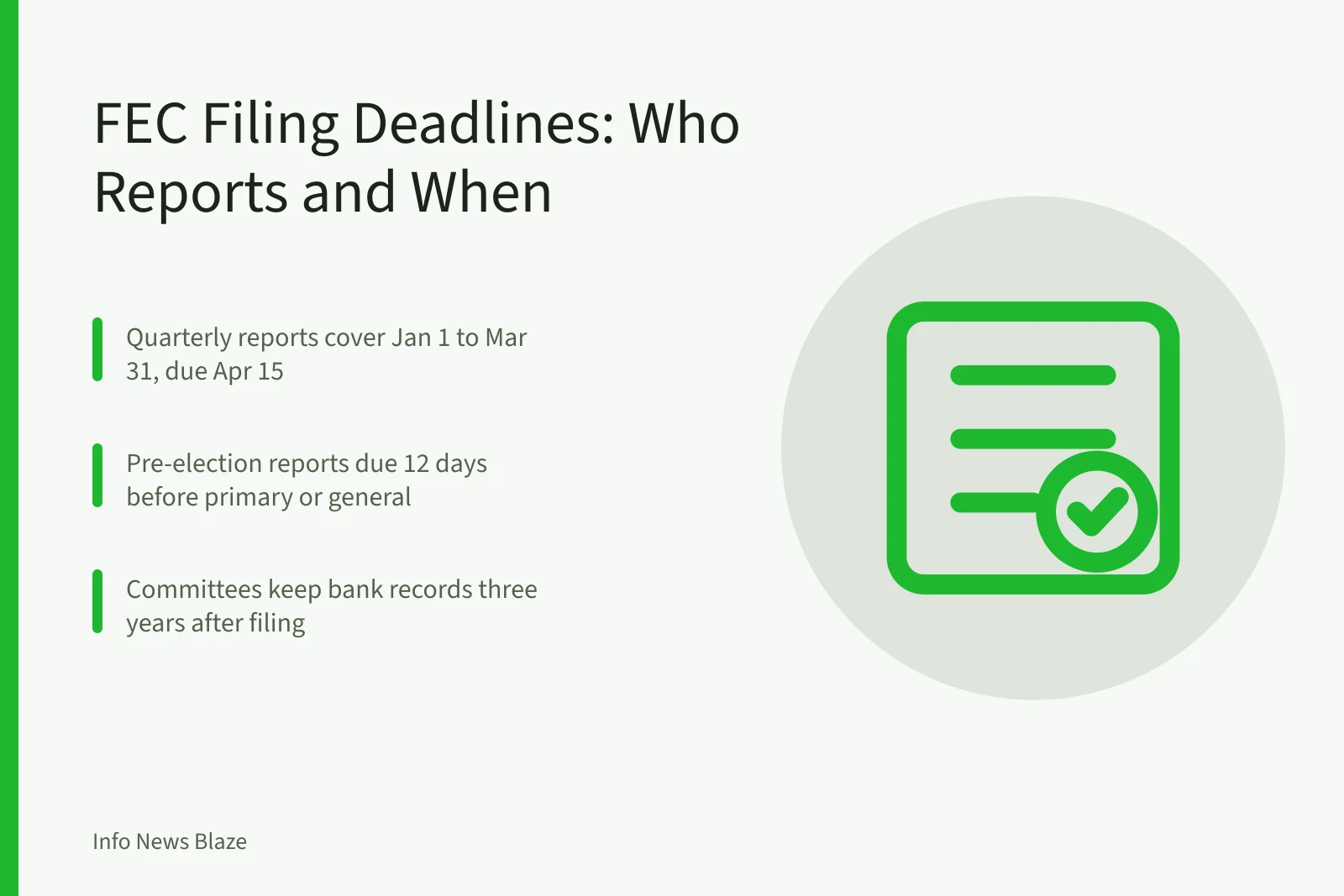
- Quarterly reports cover four calendar periods; pre-election reports are due 12 days before a primary or general election in which the committee is active.
- A compliant filing lists all receipts, disbursements, debts, and cash on hand on the correct FEC form.
- Late or missing reports can trigger civil penalties and, in knowing and willful cases, criminal referral.
Who reports to the FEC
Federal candidates, authorized committees, party committees, and political action committees file with the FEC. Independent expenditure-only committees, also called super PACs, report to the FEC as well. State and local candidates report to state disclosure agencies instead. Congress writes the broad campaign finance disclosure rules; a reader can follow that process through Track a Federal Bill.
The Federal Election Campaign Act is the main statute that creates these duties. The FEC issues regulations, forms, and advisory opinions to define reporting duties. This guidance changes little between cycles.
FEC report schedule
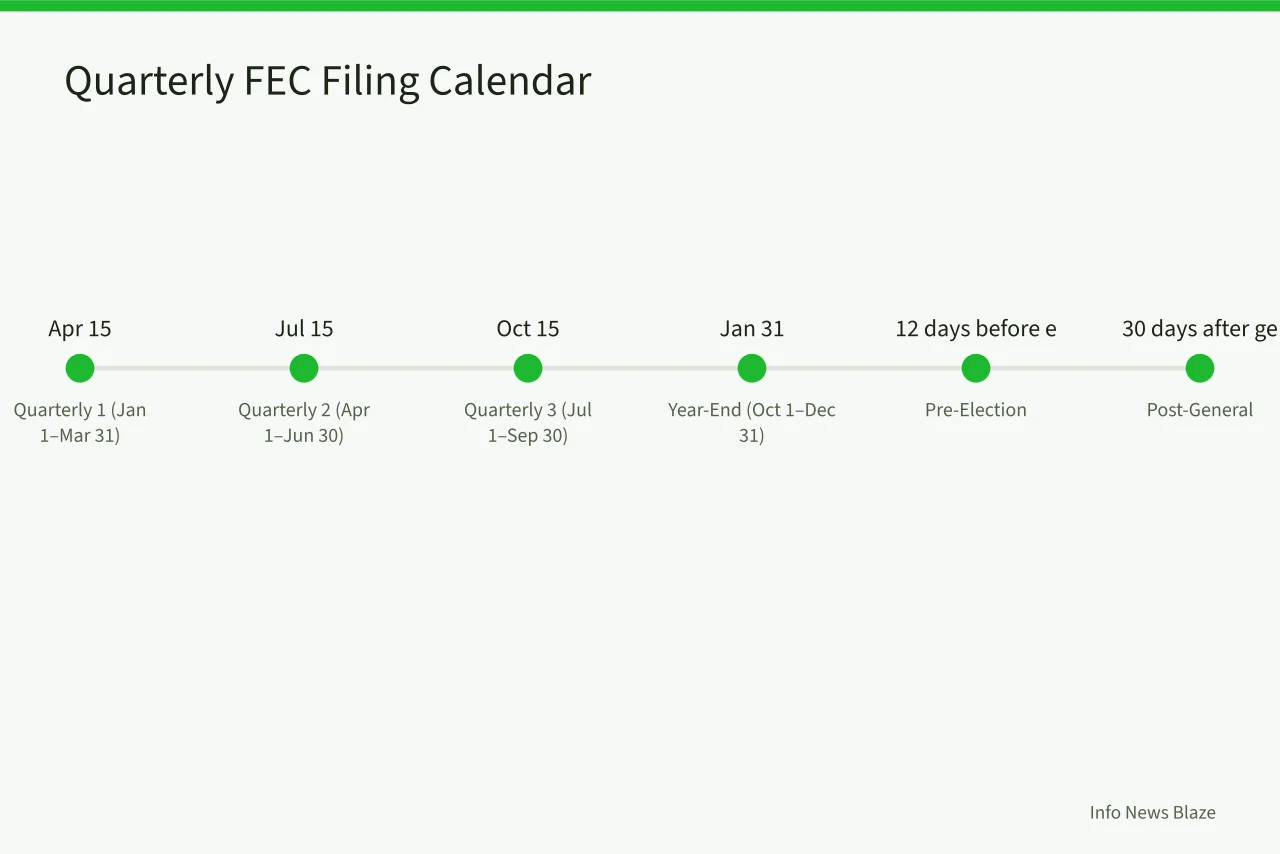
The FEC publishes a calendar each cycle. The table below lists the main report types for a committee that files quarterly. Committees on a monthly schedule file by the 20th day after each month; pre-election and post-general reports still apply.
| Report type | Coverage period | Filing deadline |
|---|---|---|
| Quarterly 1 | Jan 1 through Mar 31 | Apr 15 |
| Quarterly 2 | Apr 1 through Jun 30 | Jul 15 |
| Quarterly 3 | Jul 1 through Sep 30 | Oct 15 |
| Year-End | Oct 1 through Dec 31 | Jan 31 |
| Pre-Election | Through 20th day before election | 12 days before election |
| Post-General | Through 20th day after general | 30 days after general |
Congress sets the broad deadlines in federal law. The FEC fills in exact dates for primaries, special elections, and runoffs. Check the official FEC dates and deadlines page before relying on a generic calendar.
What a compliant filing includes
A compliant report states which committee is filing, which candidate or party it supports, and the reporting period covered. It lists total receipts, total disbursements, cash on hand, and debts owed. Itemized entries identify contributors and vendors once amounts pass thresholds set in federal law. Unlike SEC corporate disclosures, FEC reports track political money rather than business performance. Readers who want a plain walkthrough of SEC filings explained can compare the two public filing systems.
Records committees must keep
Committees must keep bank statements, receipts, invoices, and contributor records for three years after the report is filed. The FEC may examine these records during an audit or enforcement matter. Campaign finance reports are public without a request, unlike FOIA requests work at federal agencies. A compliant filer keeps the underlying records even after the public report is filed.
How to check a candidate or committee filing
Readers can pull any FEC report from the commission's public database. Check these items:
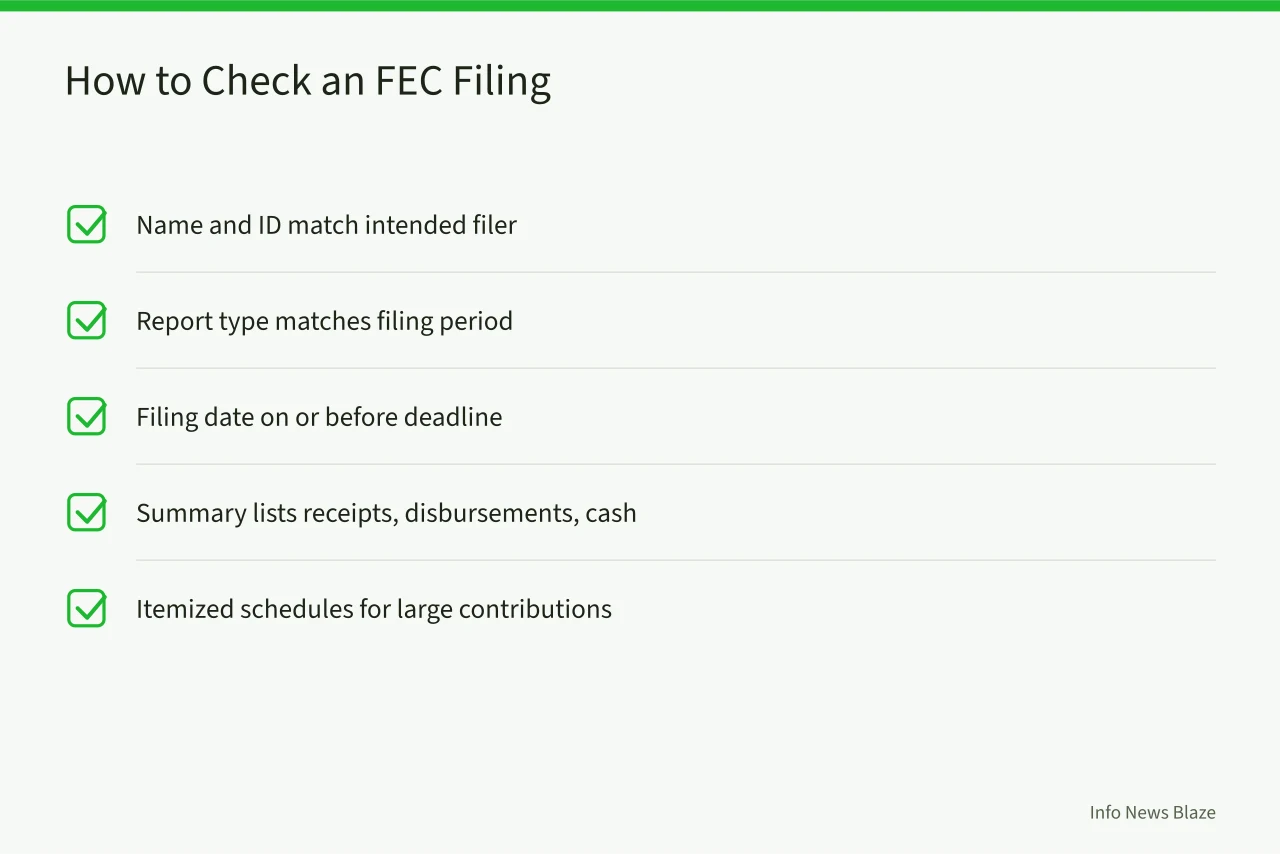
- Candidate or committee name and ID match the intended filer.
- Report type matches the filing period, such as quarterly or pre-election.
- Filing date on the report is on or before the official deadline.
- Summary page lists total receipts, total disbursements, and cash on hand.
- Itemized schedules appear for large contributions and large expenditures.
This check shows whether a committee filed on time and whether key totals match earlier reports. The FEC updates page announces deadline changes when weather, holidays, or technical failures shift a date.
What happens after a late filing
A committee that misses a deadline may owe a civil penalty. The FEC calculates penalties based on the number of days late, the amount involved, and whether the committee has prior violations. A knowing and willful failure can be referred to the Department of Justice for criminal prosecution. One missed compliance date can start that penalty clock, even if the report is filed the next day.
Where state rules differ
The FEC regulates only federal activity. States run their own disclosure programs for governor, legislature, and local races. Contribution limits, report schedules, and electronic filing rules differ by state. A candidate for U.S. Senate files with the FEC; a candidate for state senate files with the state board. Check the applicable state agency before assuming a federal deadline.
Common questions
What is the FEC pre-election report deadline? Pre-election reports are due 12 days before a primary or general election in which the committee is active. The report covers activity through the 20th day before the election.
Who must file with the FEC? Federal candidates, authorized committees, party committees, and PACs file with the FEC. State and local candidates file with state agencies.
What are the four quarterly FEC deadlines? Quarterly reports are due April 15, July 15, October 15, and January 31. Monthly filers use a different schedule with reports due by the 20th day after each month.
What happens if a committee files late? A late filing may trigger a civil penalty calculated by the number of days late and the amount involved. Knowing and willful violations can lead to criminal referral.