Guides
Part of Developing news stories need four information states
Build a news timeline: the Dobbs opinion
Build a news timeline using the Dobbs opinion as a case study: separate the leaked draft's date, its public release, and the Court's final ruling.
What to take away
- Record when an event occurred, when it was reported, and when it was verified.
- Give every timeline entry a source and confidence state.
- Use exact dates and time zones instead of relative phrases.
- Keep reporting notes more detailed than the public timeline.
- Revise an entry openly when later evidence changes it.
A news timeline is not a stack of headlines. It is a controlled record of events in sequence. Done well, it exposes gaps, prevents time errors, and lets a reader enter a complicated story without reading every earlier article. A story built on alerts follows the same date discipline; see how to read an emergency alert.
The public version should be concise. The reporting version should retain source details, conflicts, and revision history.
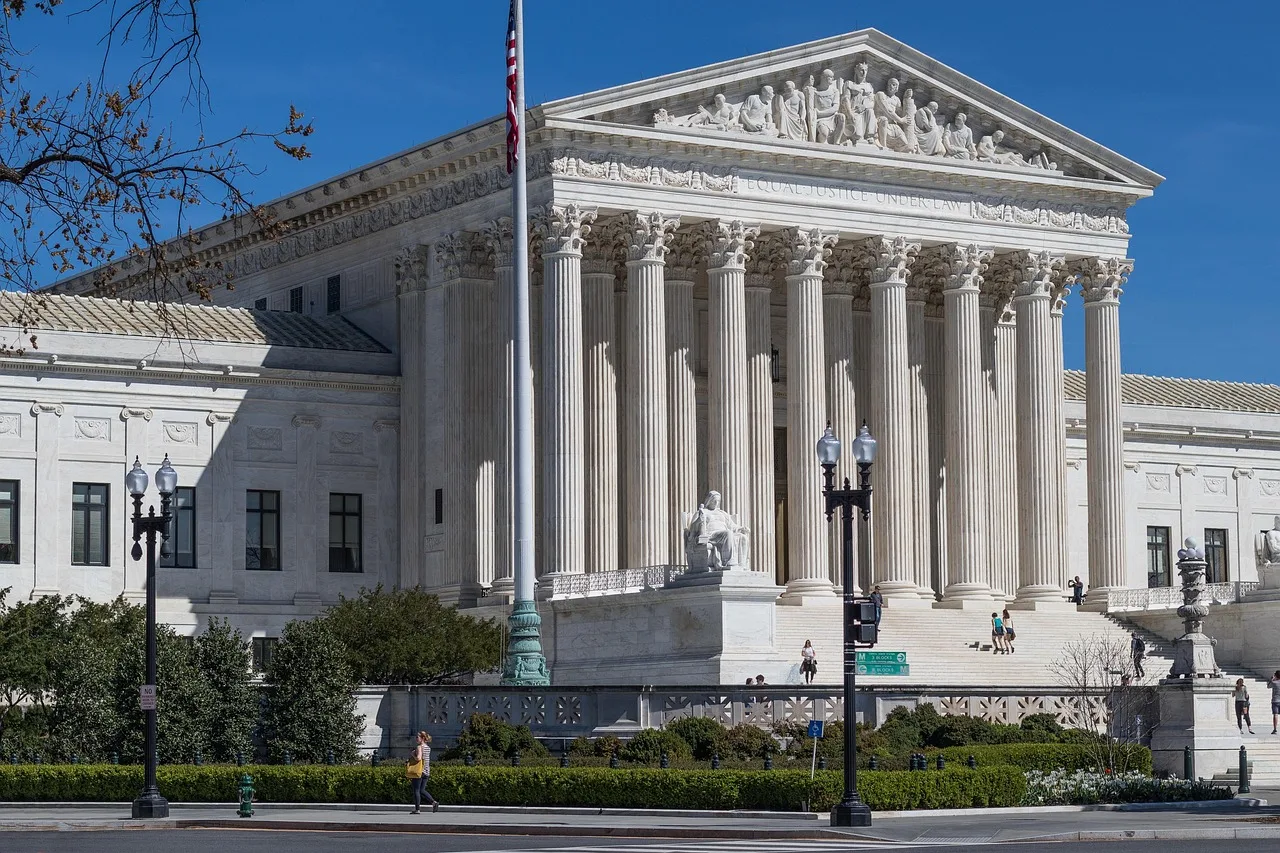
This guide uses Dobbs v. Jackson Women's Health Organization as a worked example. The case challenged Mississippi's Gestational Age Act, and the Supreme Court's final opinion overturned Roe v. Wade and Planned Parenthood v. Casey. Before the final opinion, the leaked draft was not the Court's final ruling.
A timeline usually serves a larger live file. The guide to covering developing news stories shows where the chronology sits among the other components.
Step 1: define the timeline's question
Write one sentence stating what the chronology must explain. Examples include: "How did the evacuation order expand?" and "Which decisions led to the court hearing?" For the worked example, ask when the Dobbs draft was dated, when it became public, and when the Court issued its final opinion. A broad subject produces a crowded list, while a question gives editors a reason to include or exclude each event.
Timeline boundaries to set
- Start date or triggering event
- Geographic area
- Institutions and people in scope
- Planned end point
- Minimum evidence for inclusion
For a litigation chronology, follow the stages in the court reporting guide, because filings, hearings, and rulings carry different statuses.
Also set boundaries:
Define the timeline's question
- start date or triggering event;
- geographic area;
- institutions and people in scope;
- planned end point;
- minimum evidence required for inclusion.
Step 2: create a private event ledger
Use one row per event. Do not draft elegant prose yet.
Private event ledger fields
- Event time
- Time zone
- Description
- Source
- Source time
- Status
- Revision note
Private event ledger
| Field | What to record |
|---|---|
| Event time | Best-supported time the event occurred |
| Time zone | Named zone and daylight-saving status if relevant |
| Description | Neutral statement of what happened |
| Source | Exact document, observation, recording, or interview |
| Source time | When the source published or supplied the information |
| Status | Confirmed, reported, disputed, or unknown |
| Revision note | What changed and why |
If the event time is a range, store the range. If only a date is known, do not invent a clock time to make the table sort neatly.
Step 3: normalize time without hiding local meaning
Keep the original time from the source and add a normalized time for sorting. For a local public-safety story, show local time to readers. For an international sequence, a consistent reference zone may help, but the displayed entry should still name the zone.
Original vs normalized time
Original time
- Purpose
- Preserve local meaning
- Display
- Show to readers
- Zone
- Name local zone
- DST
- Record status
Normalized time
- Purpose
- Sort events consistently
- Display
- Use for ordering
- Zone
- Name reference zone
- DST
- Adjust for sorting
Daylight saving status belongs in the record too. NIST's page on United States daylight saving time rules says the Department of Transportation, not NIST, regulates time zones and daylight time.
DST runs from the second Sunday of March to the first Sunday of November. It is not observed in most of Arizona, Hawaii, and Puerto Rico. A bare clock time near a boundary can be an hour off.
Avoid "today," "last night," and "hours earlier" in durable timeline entries. Those phrases become unclear when an article is read later or republished elsewhere.
Step 4: separate event order from publication order
The Dobbs v. Jackson Women's Health Organization case gives a concrete example. A leaked draft opinion was dated February 10, 2022; Politico published it on May 2, 2022. The Supreme Court issued its final opinion on June 24, 2022. Put those in separate entries: the draft's date is not the date it became public, and a draft is not a final ruling.
Event time vs publication time
- MondayMeeting held
- TuesdayDocument uploaded
- TuesdayDocument describes Monday meeting
- LaterDelay noted if it matters
Those are two times, not one, and the method for reading an official document makes this separation a habit, recording document date, version, and access date as separate fields.
This distinction can change interpretation. It may show what decision-makers knew at a given point or why an earlier report lacked a later fact. In the Dobbs case, the published draft showed proposed reasoning, not the Court's final ruling; the final opinion resolved that uncertainty.
Step 5: test dependencies
For every claimed cause or consequence, ask whether the chronology alone proves the connection. Sequence is necessary for causation, but it is not sufficient. Event B occurring after Event A does not establish that A caused B.
Wording for sequence vs cause
Use when
- Sequence only
- followed
- Documented rule
- the order required
- Sourced explanation
- the agency attributed
- Timing only
- coincided with
Phrase
- Sequence only
- Documented rule
- Sourced explanation
- Timing only
Use restrained wording:
Test dependencies
- "followed" for sequence;
- "the order required" for a documented rule;
- "the agency attributed" for a sourced explanation;
- "coincided with" when timing is the only established relation.
The same restraint governs numbers. The guide to reporting statistics and polls keeps association and causation apart when two measures move together.
Step 6: edit for the public version
Choose entries that change the reader's understanding. Merge repetitive procedural notices only when no meaning is lost. Give each entry a date, a compact statement, and attribution where the fact is contested or not independently established; public records reporting shows how to trace the source.
The Dobbs case also shows why a public timeline should distinguish document, publication, and decision. The leaked draft is a document event; Politico's release is the public reporting event; the Supreme Court's final opinion is the official decision. Keep all three entries separately sourced, and identify the draft as preliminary.
The finished Dobbs timeline
Here is the ledger from the steps above, edited into a public version. Each entry carries a date, a source and a status.
- March 2018Mississippi enacts the Gestational Age Act, which bans most abortions after 15 weeks. Jackson Women's Health Organization sues in federal court. Source: the statute and the district court docket. Status: confirmed.
- November 20, 2018U.S. District Judge Carlton Reeves permanently blocks the law. Source: the district court ruling. Status: confirmed.
- December 13, 2019The Fifth Circuit affirms. Source: the appeals court opinion. Status: confirmed.
- May 17, 2021The Supreme Court agrees to hear the case, No. 19-1392. Source: the Court's order list. Status: confirmed.
- December 1, 2021Oral argument. Source: the Court's argument calendar and transcript. Status: confirmed.
- February 10, 2022The date on the draft opinion. Source: the draft as published. Status: reported, document only.
- May 2, 2022Politico publishes the draft. Source: Politico. Status: confirmed as a publication event.
- May 3, 2022Chief Justice John Roberts says the draft is authentic but not the Court's final position. Source: Supreme Court statement. Status: confirmed.
- June 24, 2022The Court issues its final opinion, overruling Roe and Casey. Source: the slip opinion. Status: confirmed.
The last two entries are why the draft stays labeled preliminary until the Court's own statement and opinion arrive.
Step 7: maintain a change log
When evidence changes an entry, keep three things:
Maintain a change log
- the previous wording;
- the new wording;
- the reason and source for the change.
The public correction should identify the affected fact. "This timeline was updated" is not enough if the earlier version gave the wrong date or sequence. The context checklist for developing stories makes this update-and-correction pass a standing step.
Quality checks
- Sort by event time and scan for impossible overlaps.
- Compare every name and number with the cited record.
- Confirm that time zones are consistent.
- Mark estimates and preliminary figures.
- Remove claims that rely only on publication order.
- Check that the latest entry does not assume an unresolved outcome.
- Read the timeline from the perspective of a first-time visitor.
Common questions
Should the newest event appear first?
A reverse-chronological feed helps repeat visitors find updates. A background timeline is usually easier to understand from earliest to latest. Label the order.
What if two sources give different times?
Record both in the private ledger, seek the underlying record, and explain the conflict if it affects the public account.
Can a quotation be a timeline entry?
Only when the statement itself is an event that matters. Otherwise, summarize the event and use the quotation as support.
How long should each entry be?
Use enough words to identify the action, actor, and significance. Move extended explanation into a background note rather than packing it into every row.